

Bridge to Basel 2025-26
✳︎
Final Capstone Project
✳︎
3-Piece Capsule Collection
✳︎
Bridge to Basel 2025-26 ✳︎ Final Capstone Project ✳︎ 3-Piece Capsule Collection ✳︎
A wardrobe that travels with you
The big through line at Miami Art Week was sustainability — sustaining art, communities, culture, and human contribution in an age of quick-turnaround content and mass consumption. What kept stopping me were the artists and designers who were authentic and deliberate, especially in textiles, where I know firsthand what it takes to build something by hand. That through line became the foundation of everything I made for this Capstone: capsule garments that adapt with the person wearing them — inviting people to experiment, stay resourceful, and fully embrace their personal style.
-
“Rewearability is the name of the sustainability game.”
My response was a three-piece convertible capsule. Each piece is designed to transform. A pair of pants that button off into a mini skirt. A full dress with a hem that can be let loose or cinched into a bubble effect. A button-up high-neck sweater that converts from short to long sleeve. Together, they can be mixed, layered, and re-worn across seasons, climates, and occasions — creating over 12 distinct silhouettes from just three pieces. What emerges is a capsule of garments that travel and adapt with you.
The concept crystallized on the first day of the program: I landed in Miami in December, straight from a freezing New York City, and immediately found myself doing a scavenger hunt through the Design District. I needed to go from airport-cozy to Miami-alive in one outfit. This loose idea hardened into a design conviction when my group at J.Crew dressed our mannequin for exactly that scenario: transitioning from cold to warm, layering and de-layering as she moved. I realized I had been designing for that woman my whole career. That woman is me.
PROCESS
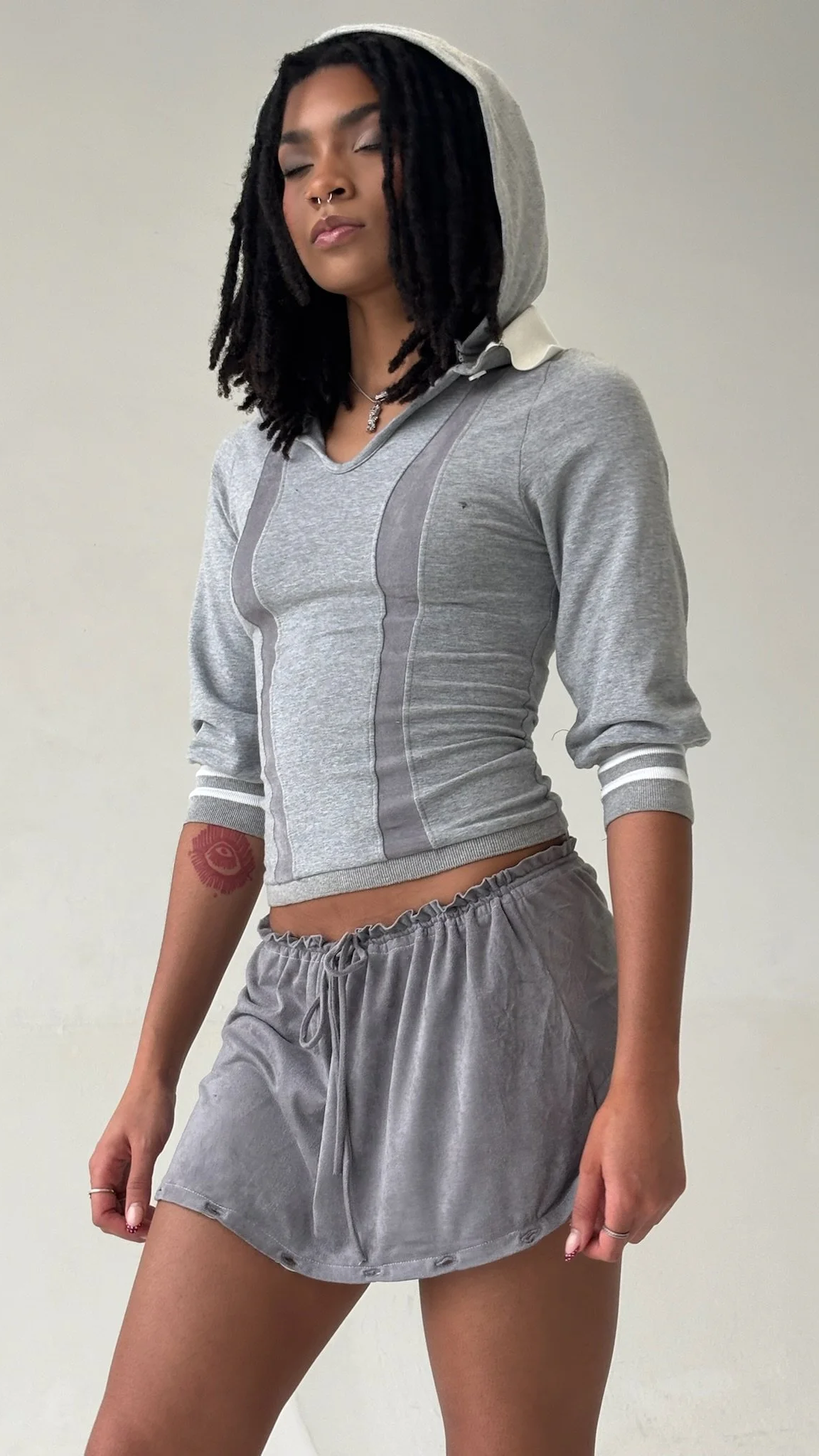
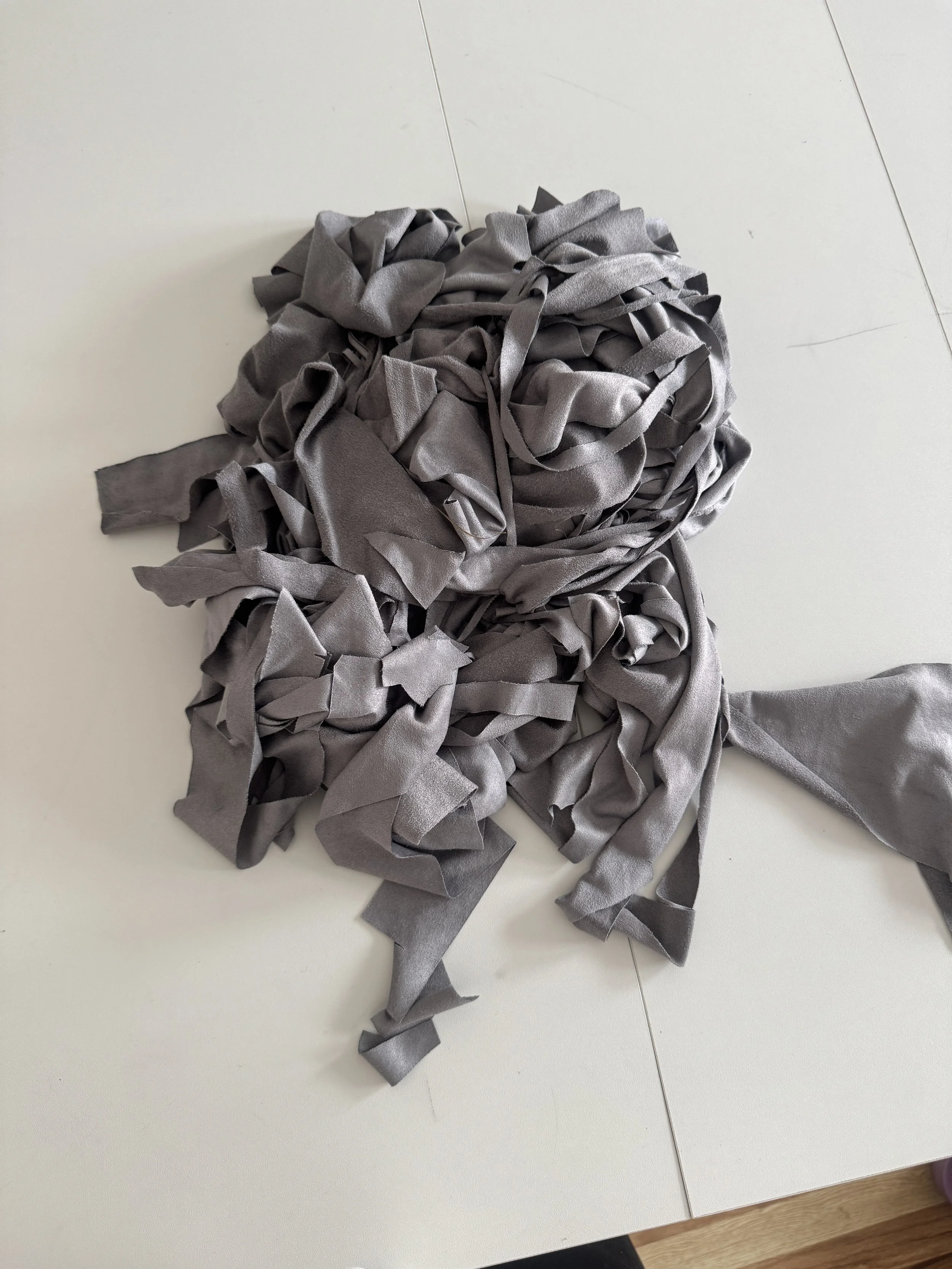
For this capsule, my process was hands-on, iterative, and instinctual. I worked from my own brand’s archive, constructing all final prototypes out of an ultra-soft faux stretch suede used in a previous project (the SIREN polo, which itself is a convertible top that features a zip-off hood). I started with pants: drafted the pattern by hand, and built a pant prototype out of scrap yardage. I wore this first muslin during a night out with friends to test how it moved and draped on a real body.I created a dress next, patterning it twice — pivoting from long to short sleeve once I realized it needed to function as both a standalone sundress and a layering piece under the third capsule item, a sweater. As for the sweater, I patterned it based exactly on my sketch, with only minor adjustments from the first mockup to the final prototype.
I constructed and finished garments using techniques that I’ve learned through my on-going sewing and construction practice – seams were serged, and a single-needle chainstitch was used for topstitching details. Once assembled, I brought the pieces to Jonathan Embroidery in the New York City Garment District for buttons and buttonholes.
PHILOSOPHY & WHAT COMES NEXT
Every choice in this capsule is a rejection of something. I reject fashion seasons — an industry construct that serves capital, not people. Not everyone has the means or the space to build a new wardrobe every three months, and the culture that tells them they should is one I refuse to participate in. I also reject overproduction, as well as the idea that sustainability stops at materials. For an independent designer working alone in New York City, sustainability means sustaining myself – burnout is not a badge of honor. I work in small runs, usually formulated as capsules similar to this capstone collection. I construct samples myself and source materials locally, staying rooted in the Garment District — not for aesthetics, but because I can touch the fabric before I cut it and support the local community of artisans and garment workers.
This capsule is built around these values — it is designed by and for real bodies in motion: working, walking, dancing and traveling. I use stretch material, drawstring functionality, and generous ease because clothing should move the way people move, and it should fit people the way people are — not the other way around.
The Bridge to Basel experience taught me the power of connection — and how connection lives in the body before it lives anywhere else. My work has always been about inviting people in: into comfort, into community, into themselves. This is how I move through the world, and it shows up in every seam I finish and in each creative project I shepherd.
My vision is clear. My process is documented. I am looking forward to further opportunities to seek mentorship, access, and a broader creative community that values intention over volume.
I believe clothing can be a form of care — for the person wearing it, for the community that made it, for the environment that absorbs the cost of every piece that gets thrown away. This capsule is a proof of concept. What comes next is scaling that proof — one small run, one real body, one conversation at a time.
[ download full personal narrative pdf ]
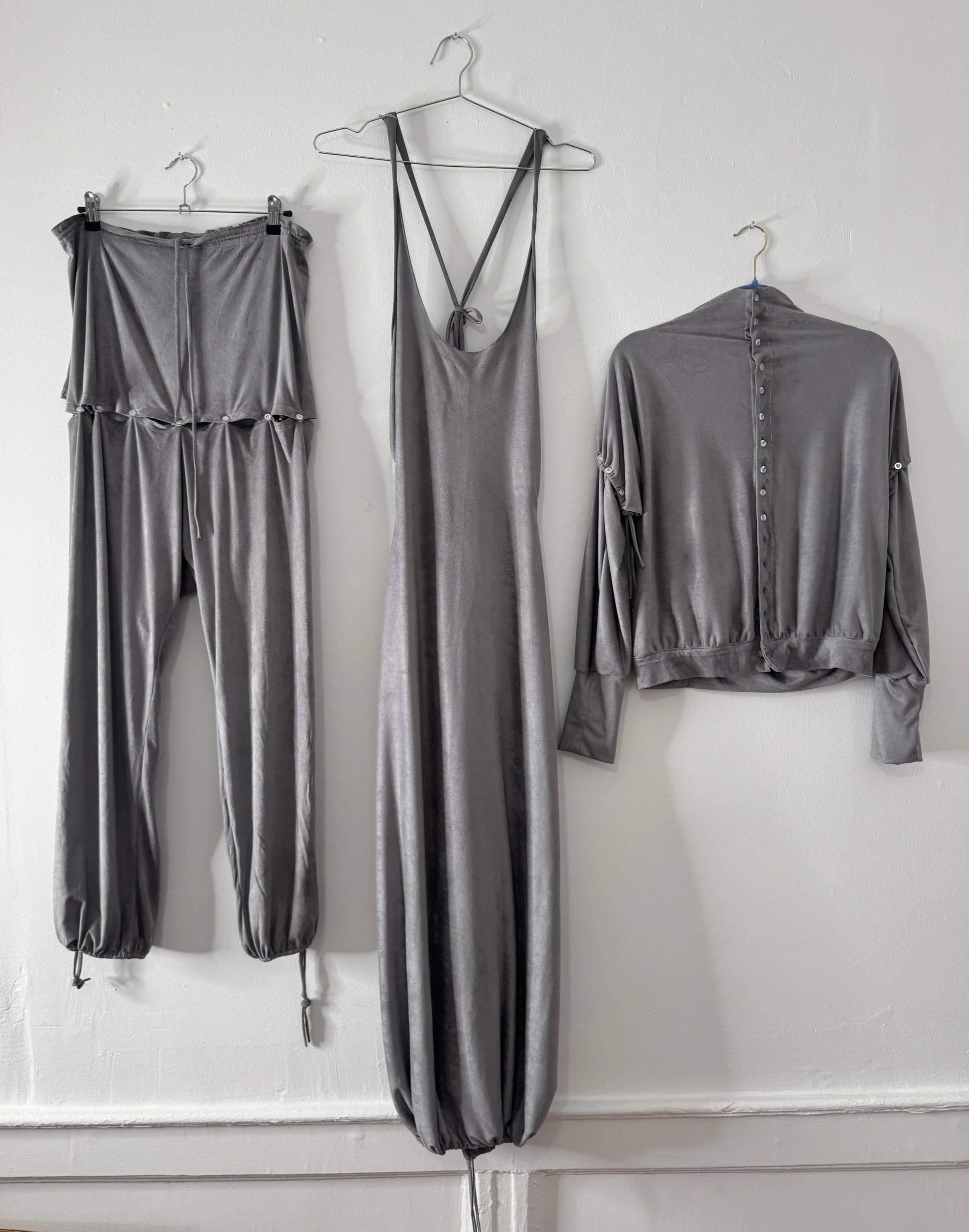
1) Bubble Sundress
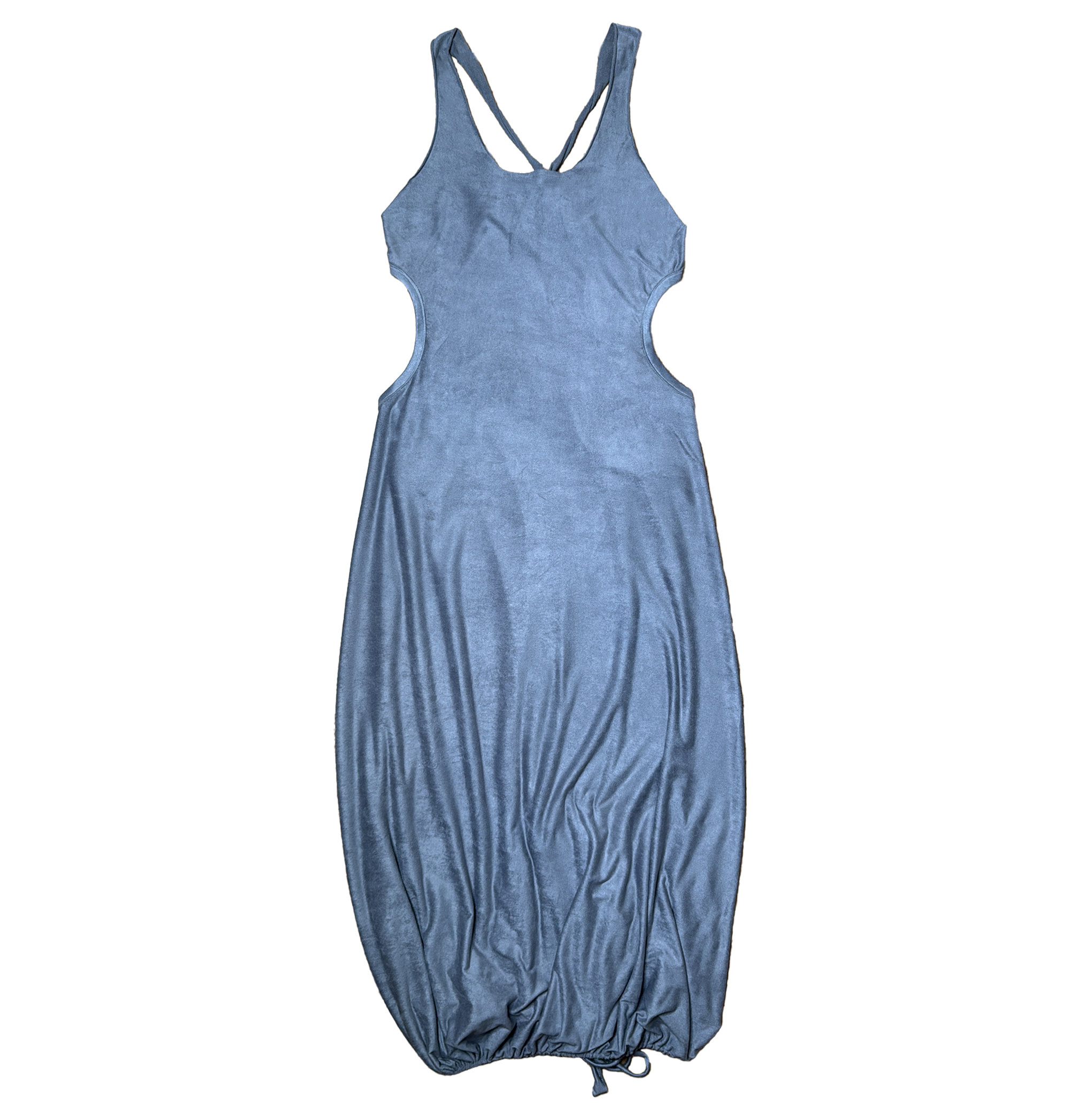
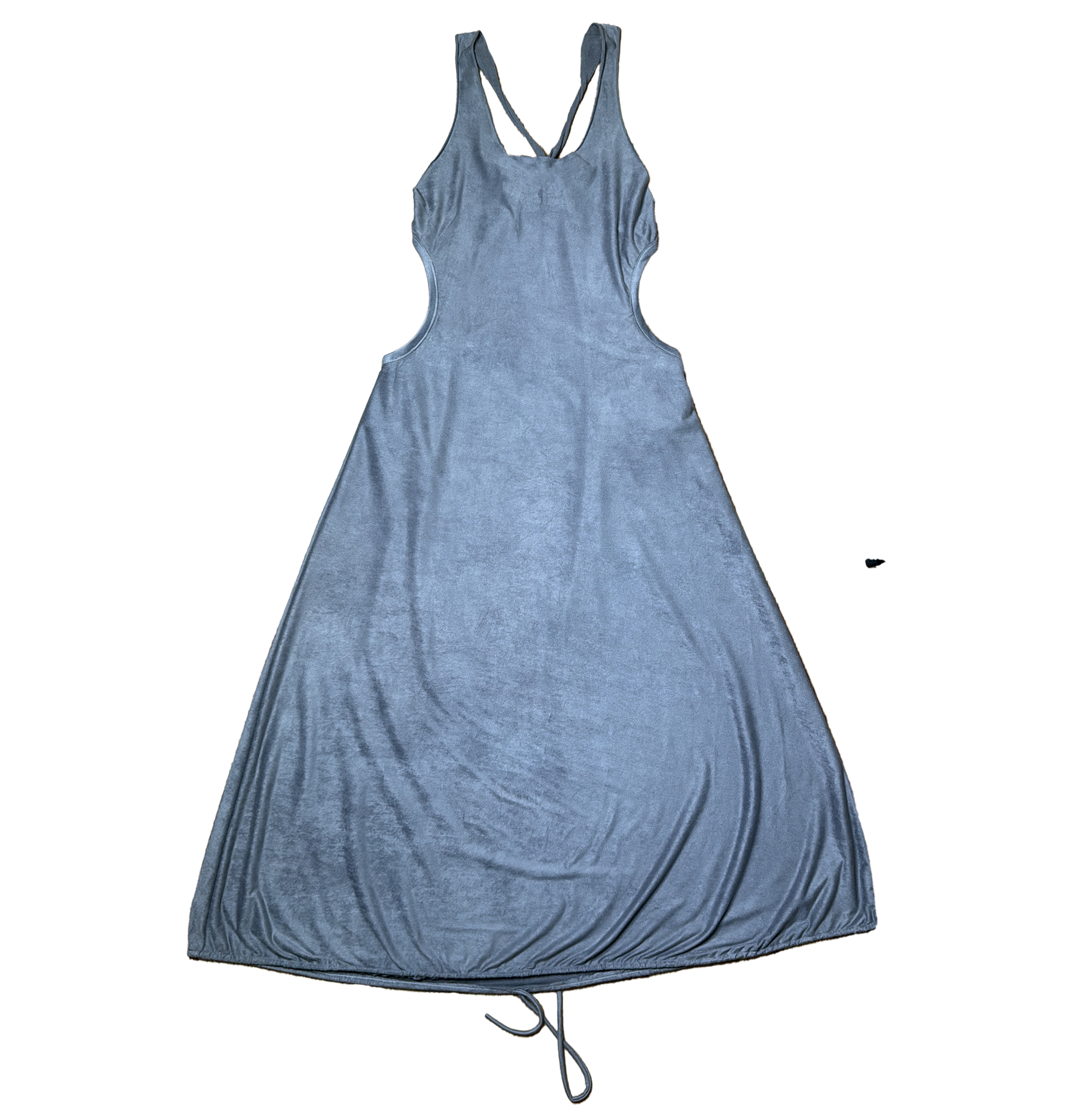
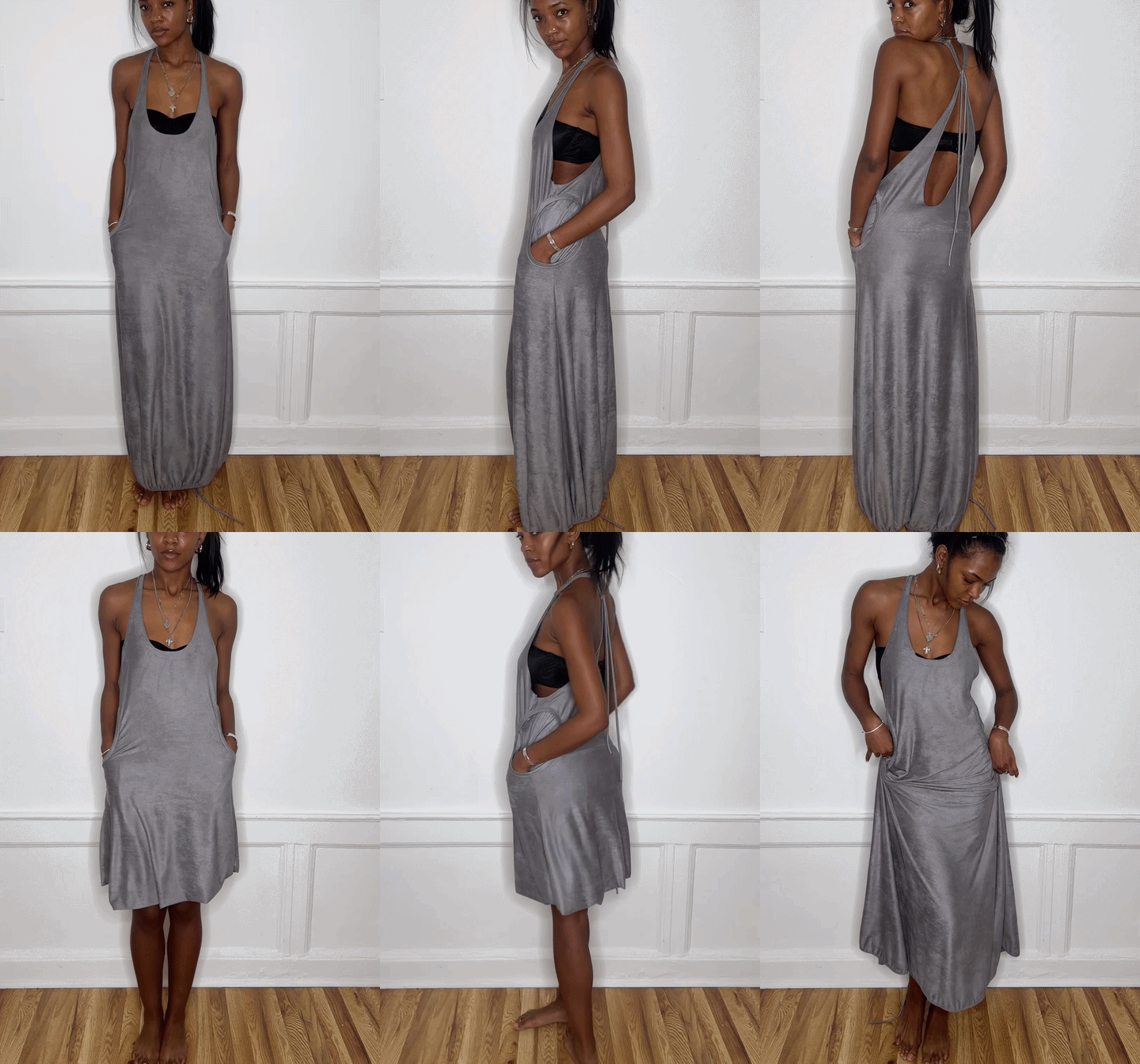
A maxi dress with a low U-neckline and an even deeper back cutout. Circle-cut pockets sit at the waist, both functional and decorative.
The hem is finished with a drawstring, which does real work: cinch it into a bubble silhouette, let it loose for a flowing A-line, or gather the skirt up and fasten it at the waist to create a midi length.
Wear it alone, layer the lounge pants underneath for warmth, or throw the sweater on top when the temperature drops.
process
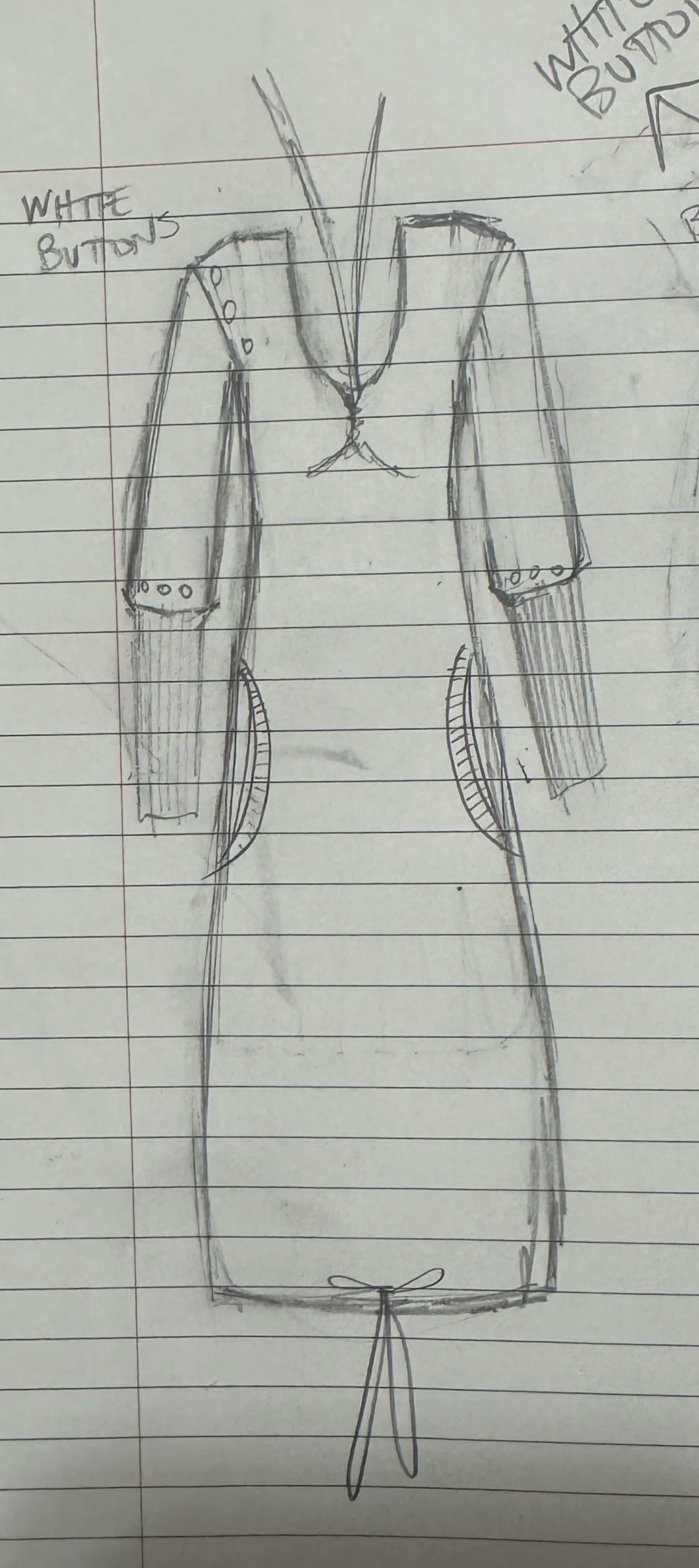
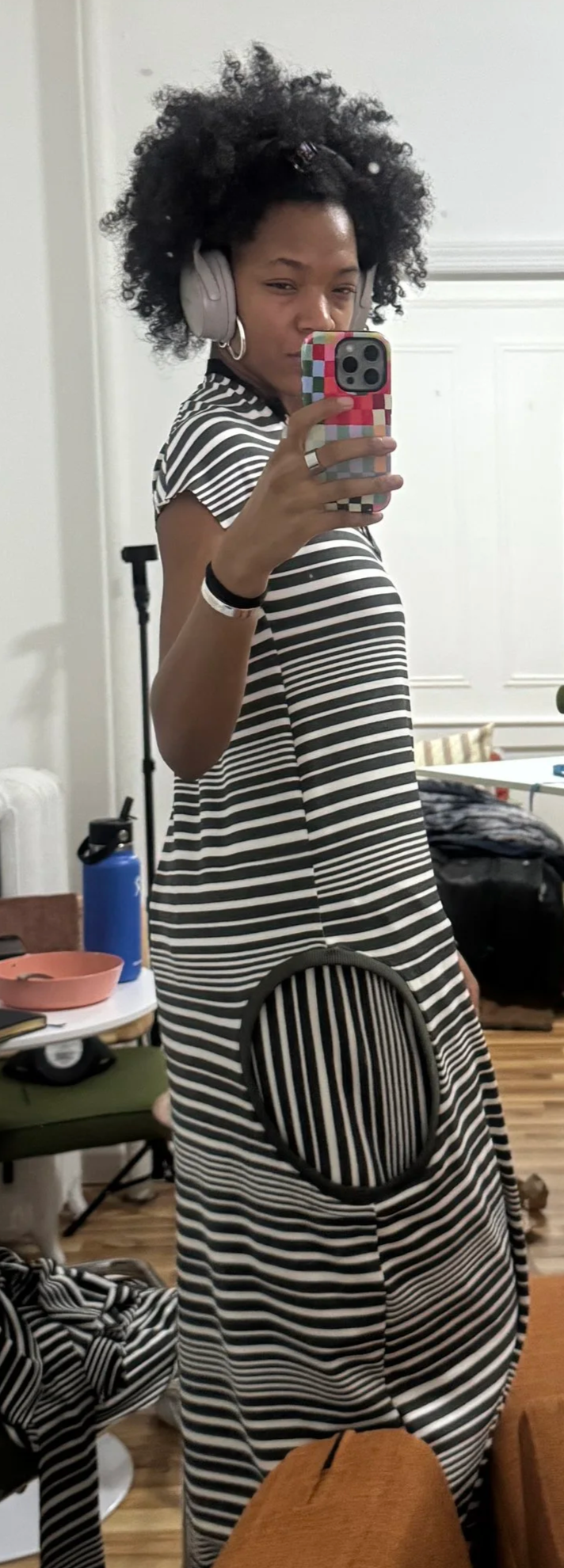
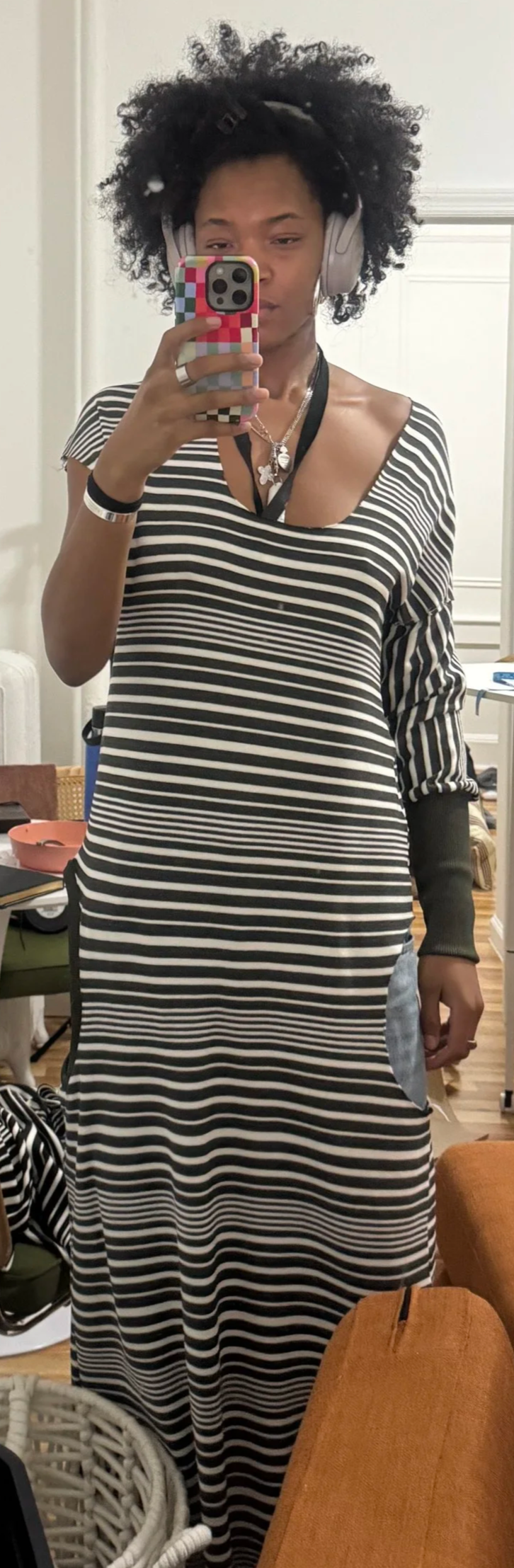
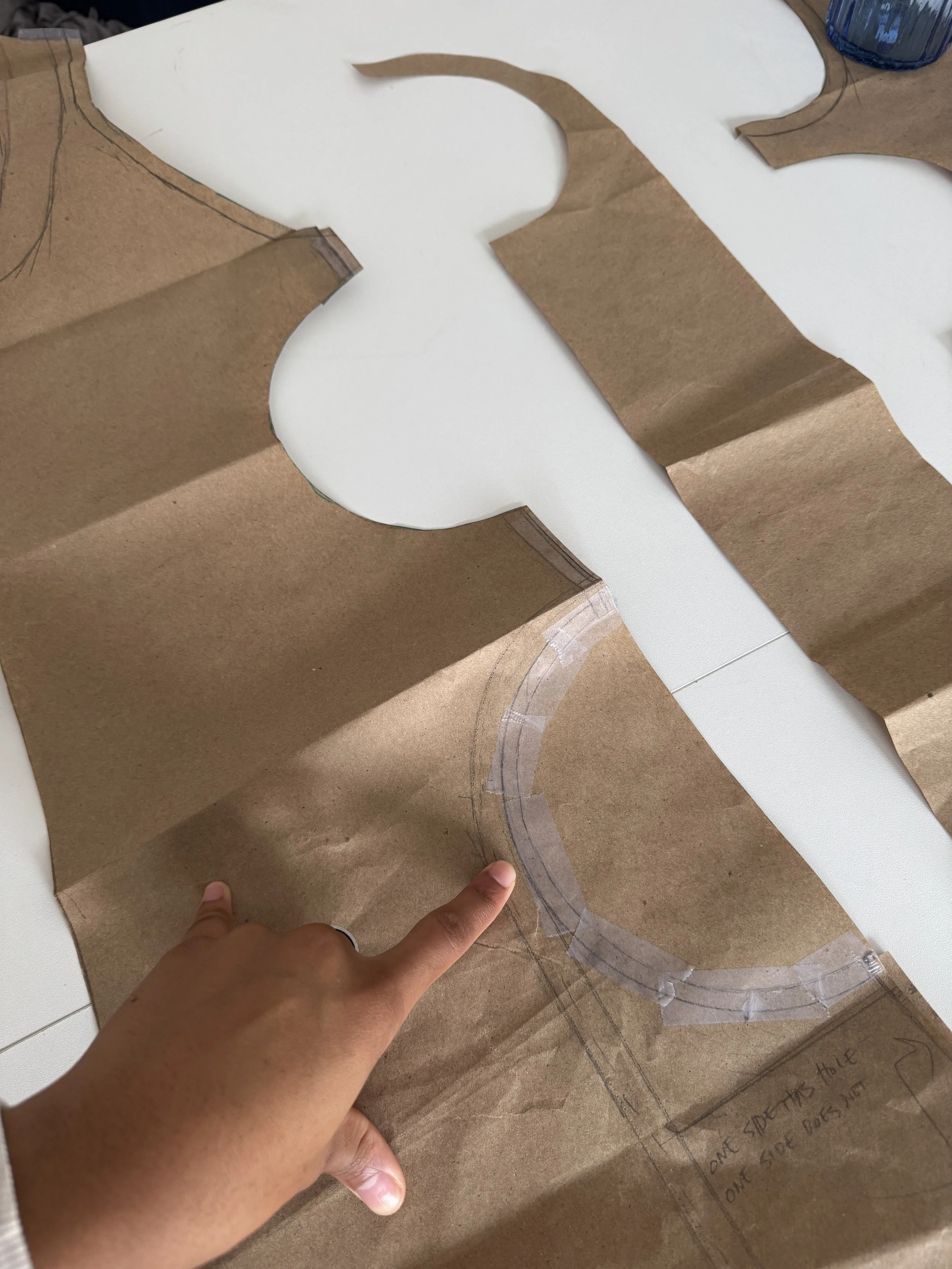
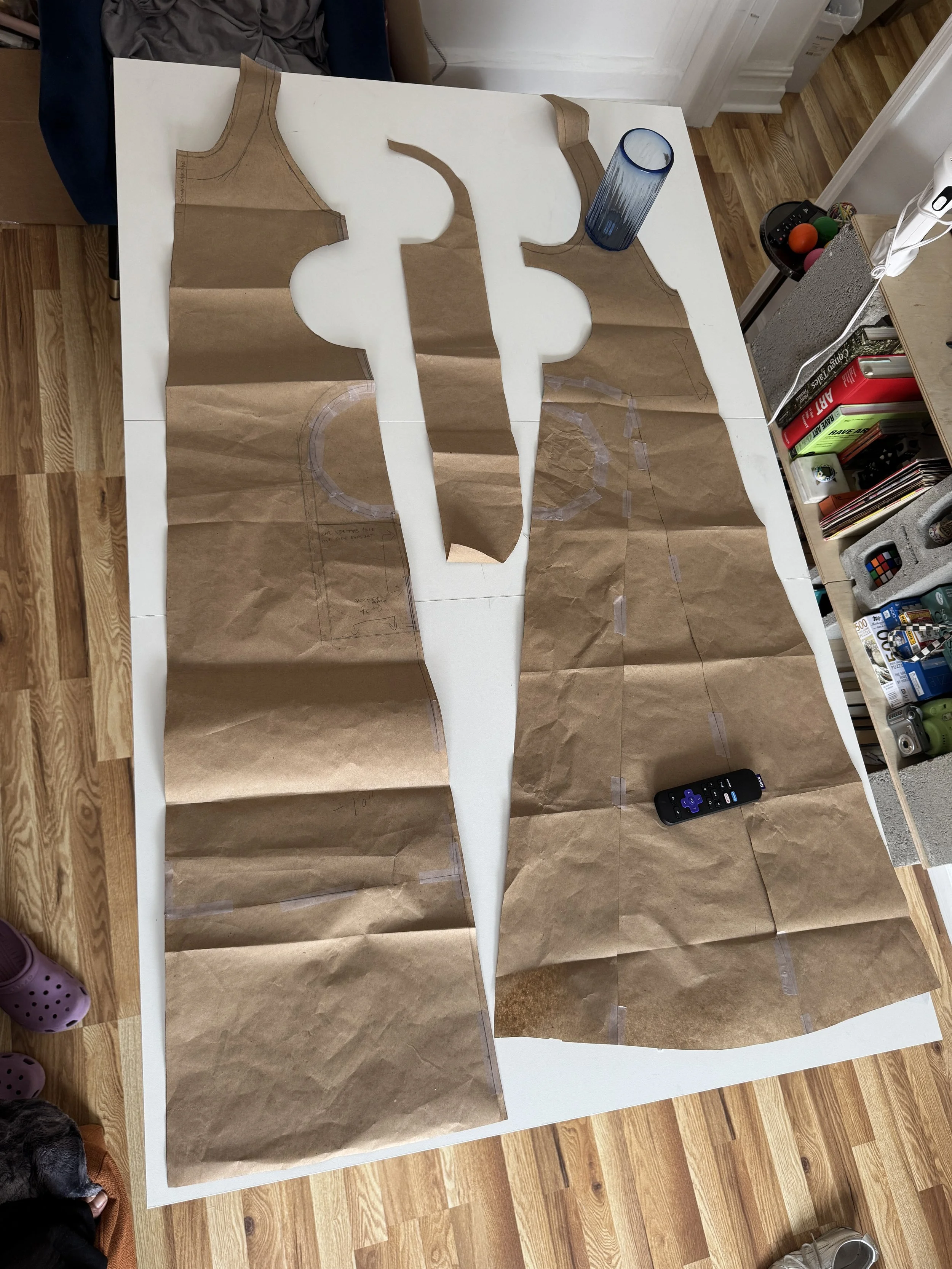
The first sketch called for a long-sleeve that could button off into a short sleeve. After building the first prototype, two things became clear: the pockets needed to move up to sit at the waist for a more natural arm angle, and the long-sleeve conversion was cut as the dress needed to read as a true sundress that could be layered under the sweater. The pattern was adjusted, pockets repositioned, sleeve reduced to a tank silhouette.
final prototype
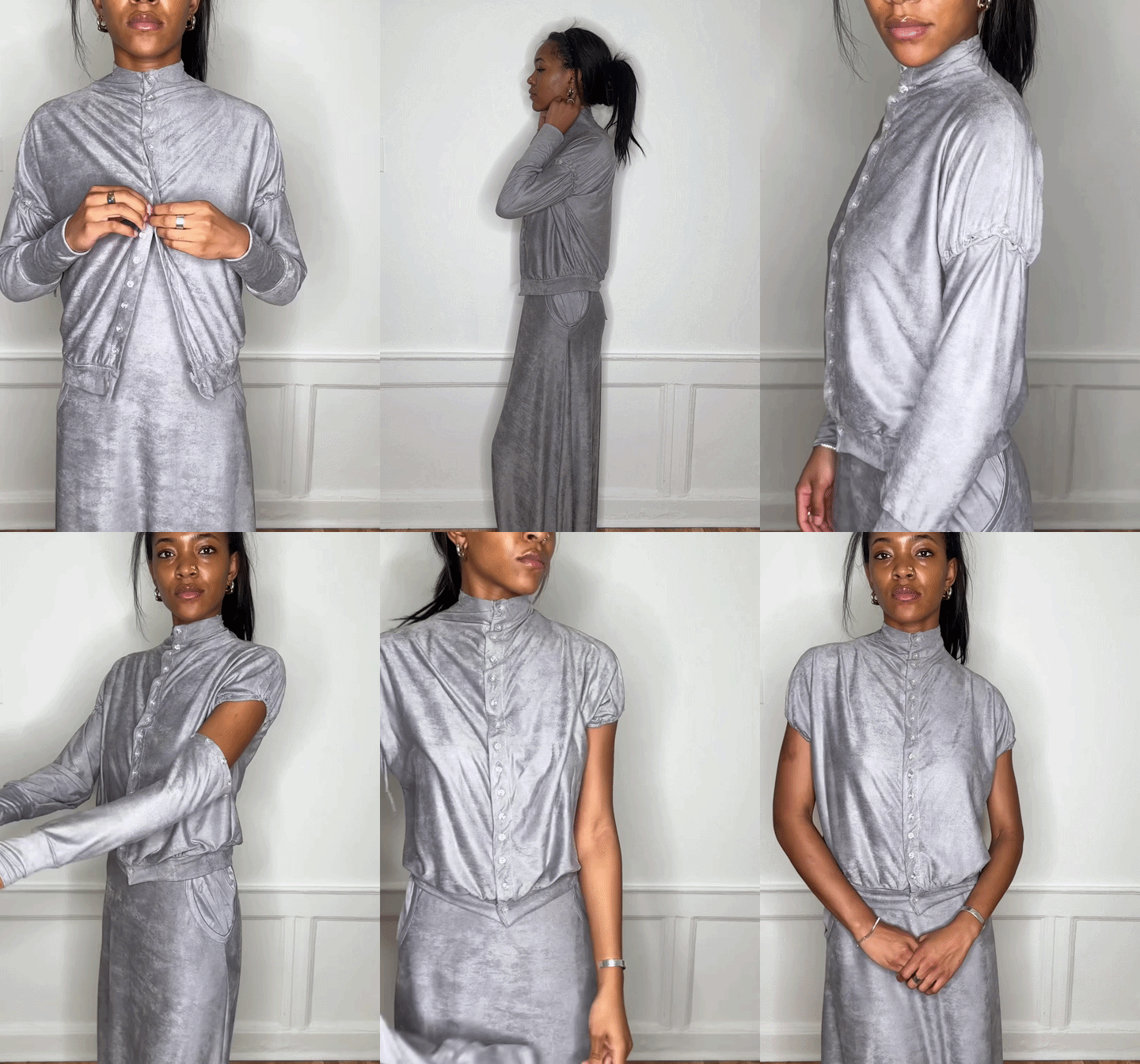
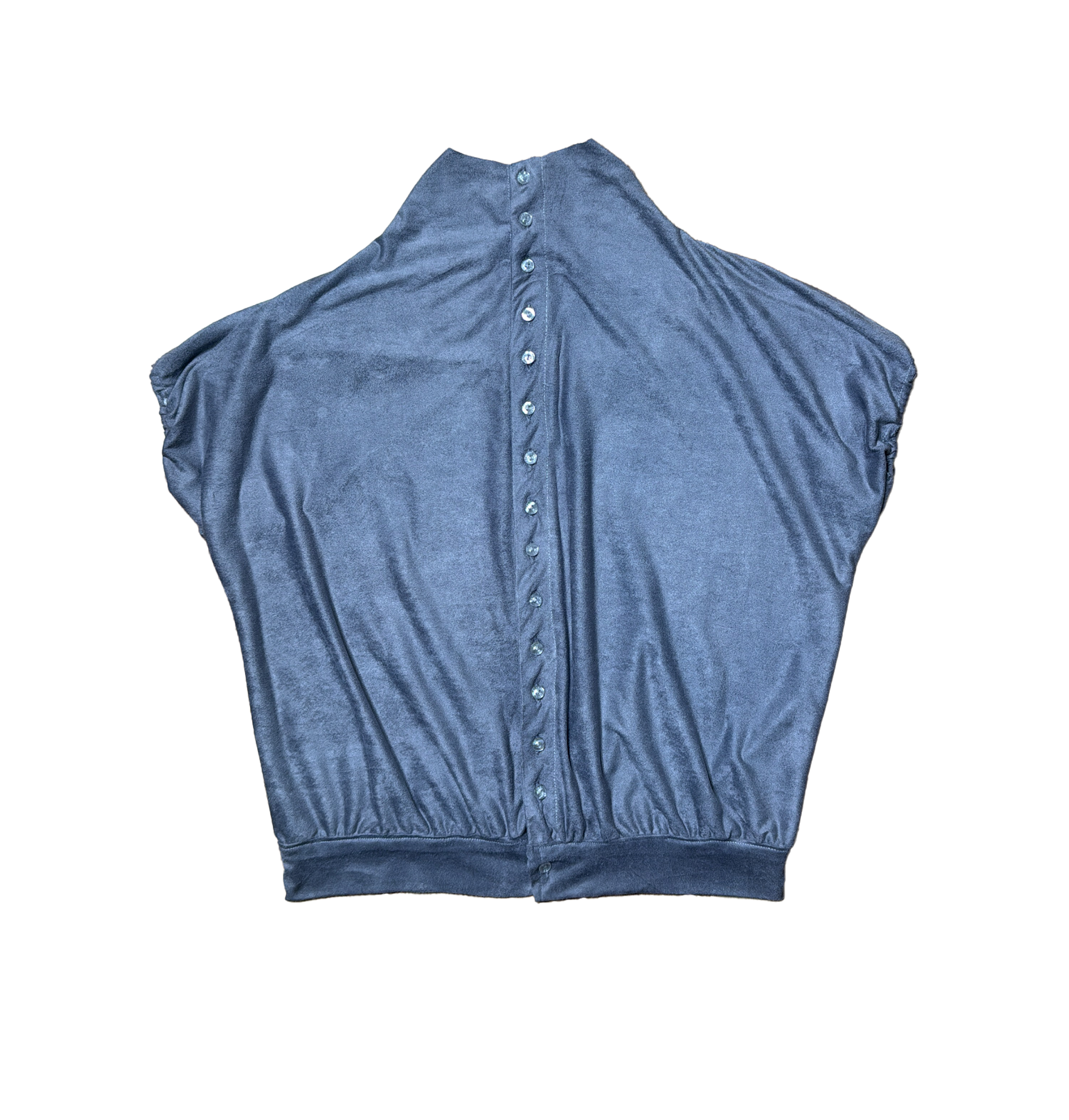
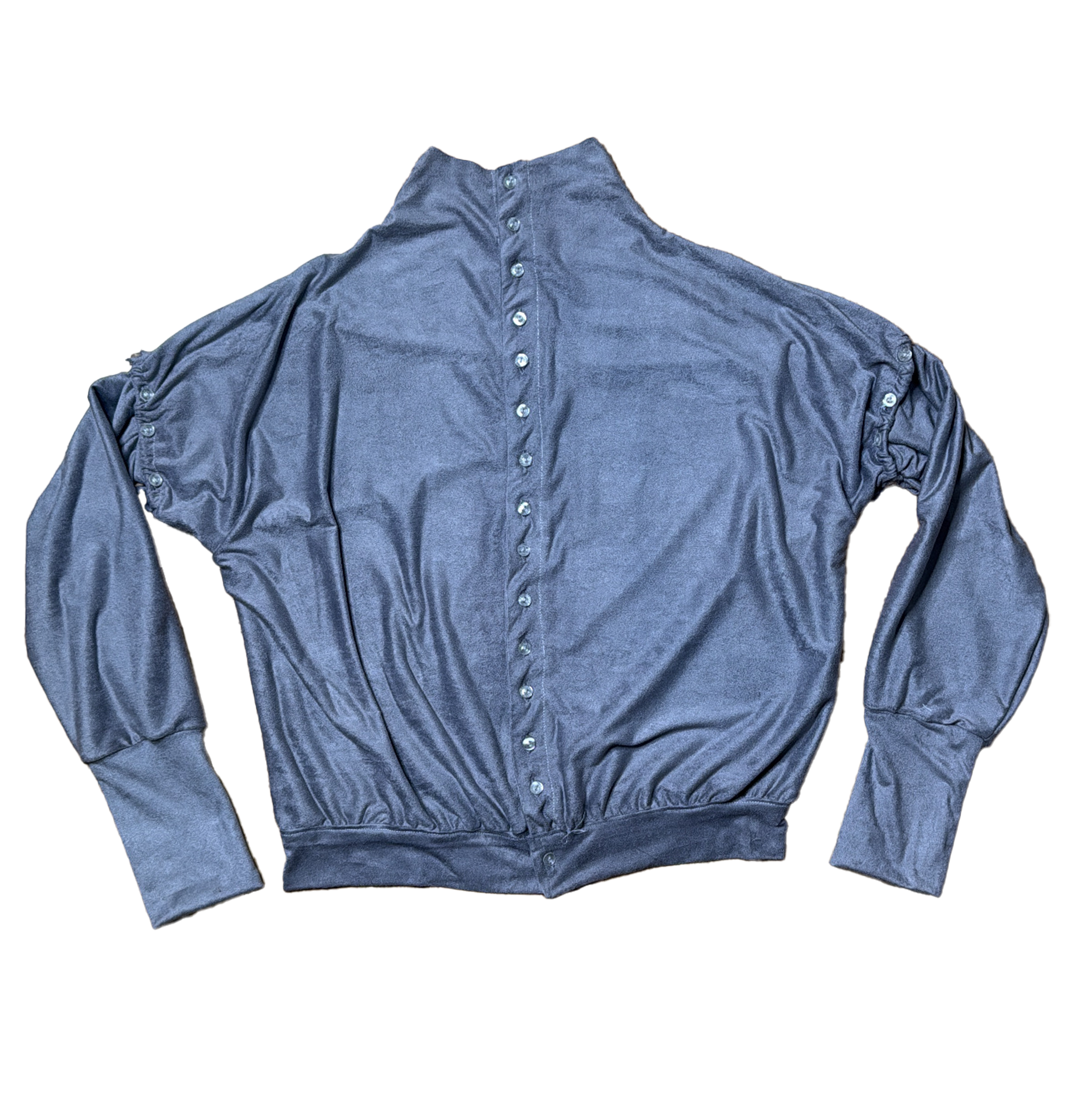
This button-up sweater covers every climate and occasion. Buttons can be left open at the chest or the hem depending on the mood. A cinched waistband creates the same ruched, bubble quality as the aforementioned dress (a recurring motif across the capsule).
The short bubble sleeves come with detachable long sleeves that button on, transitioning the piece from warm-weather layer to cold-weather staple.
Throw it over the dress, pack it in a bag as a backup, or wear it with the lounge pants for a fully coordinated look.
2) High Neck Sweater
process
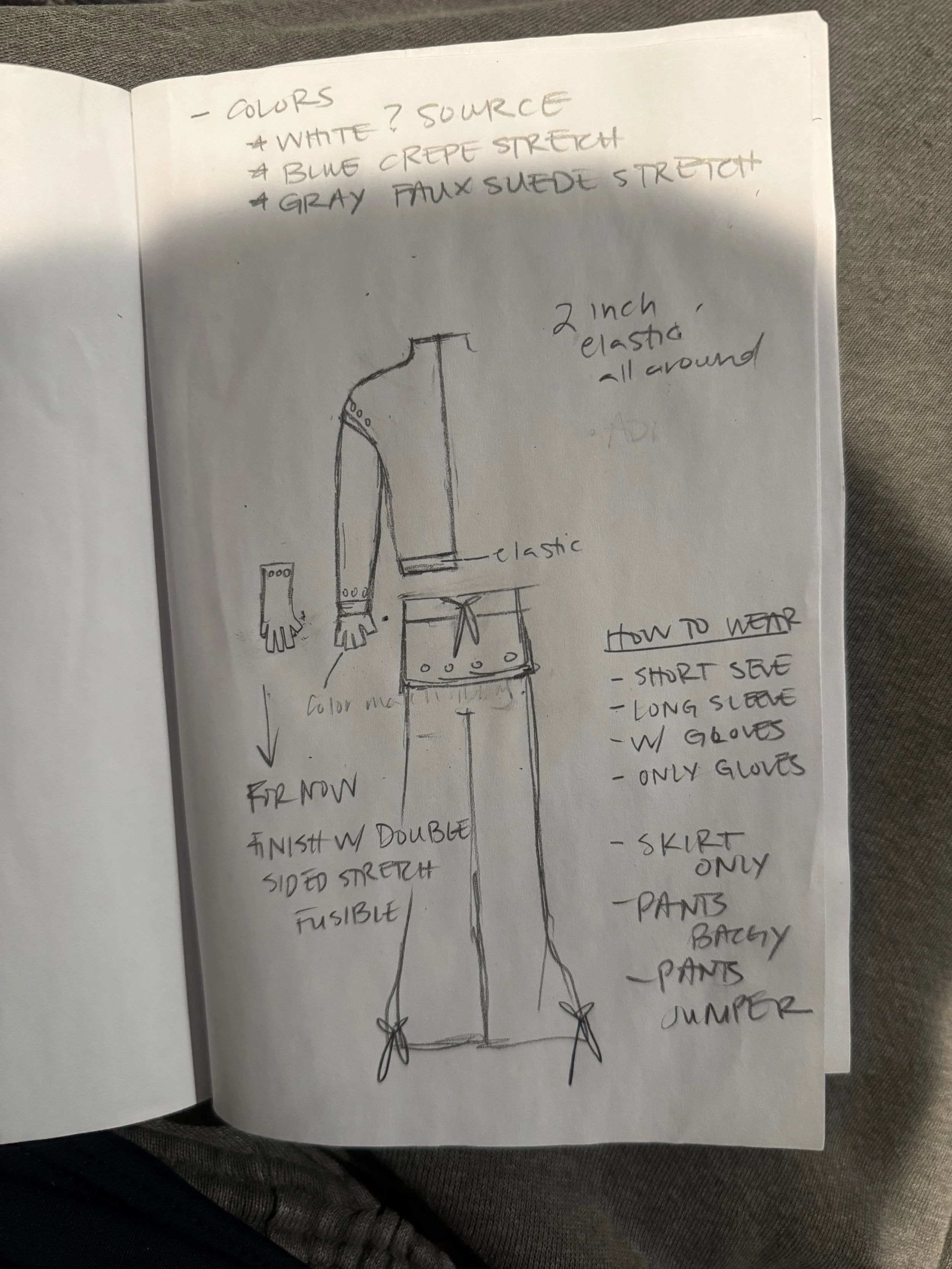
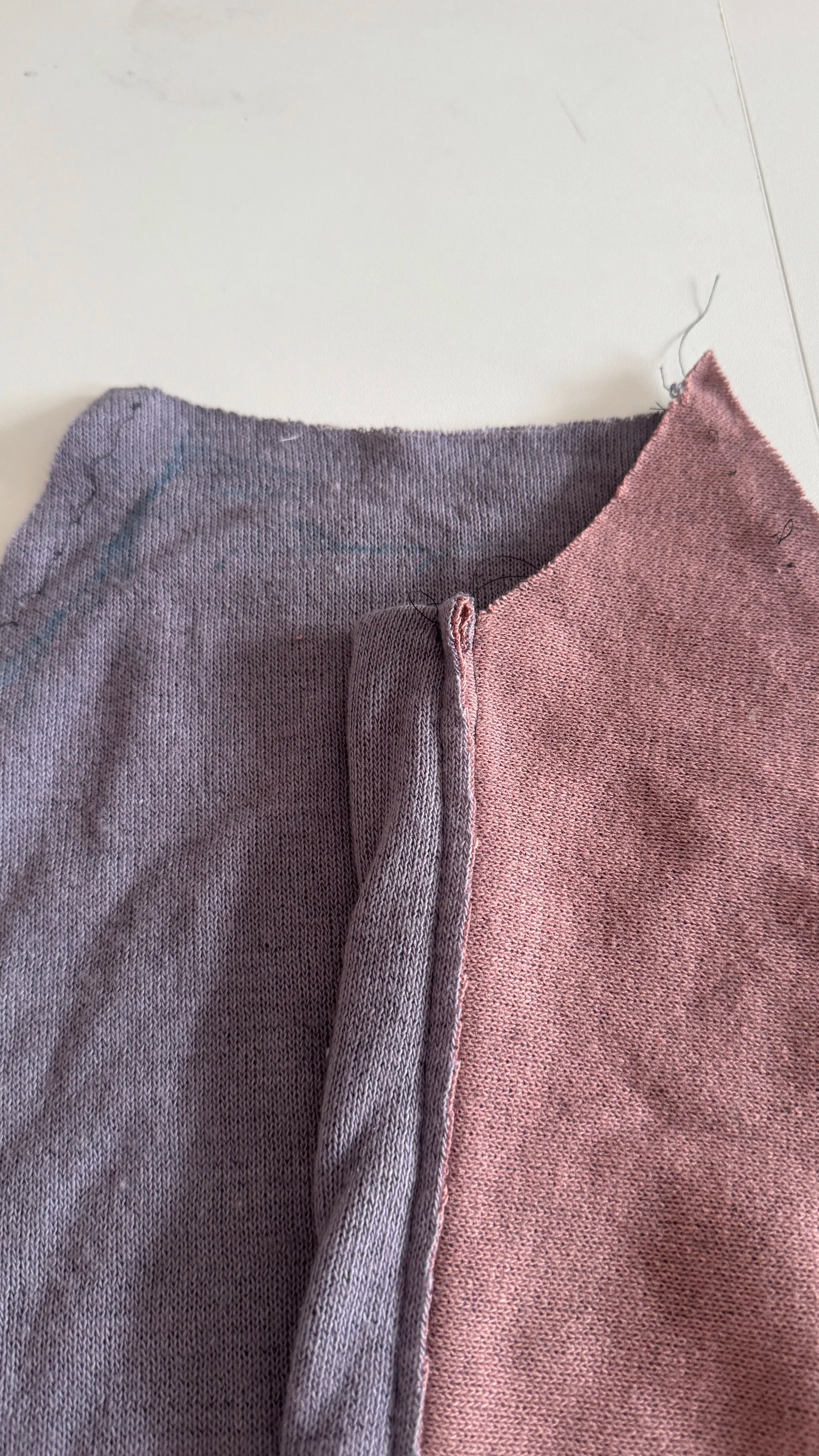
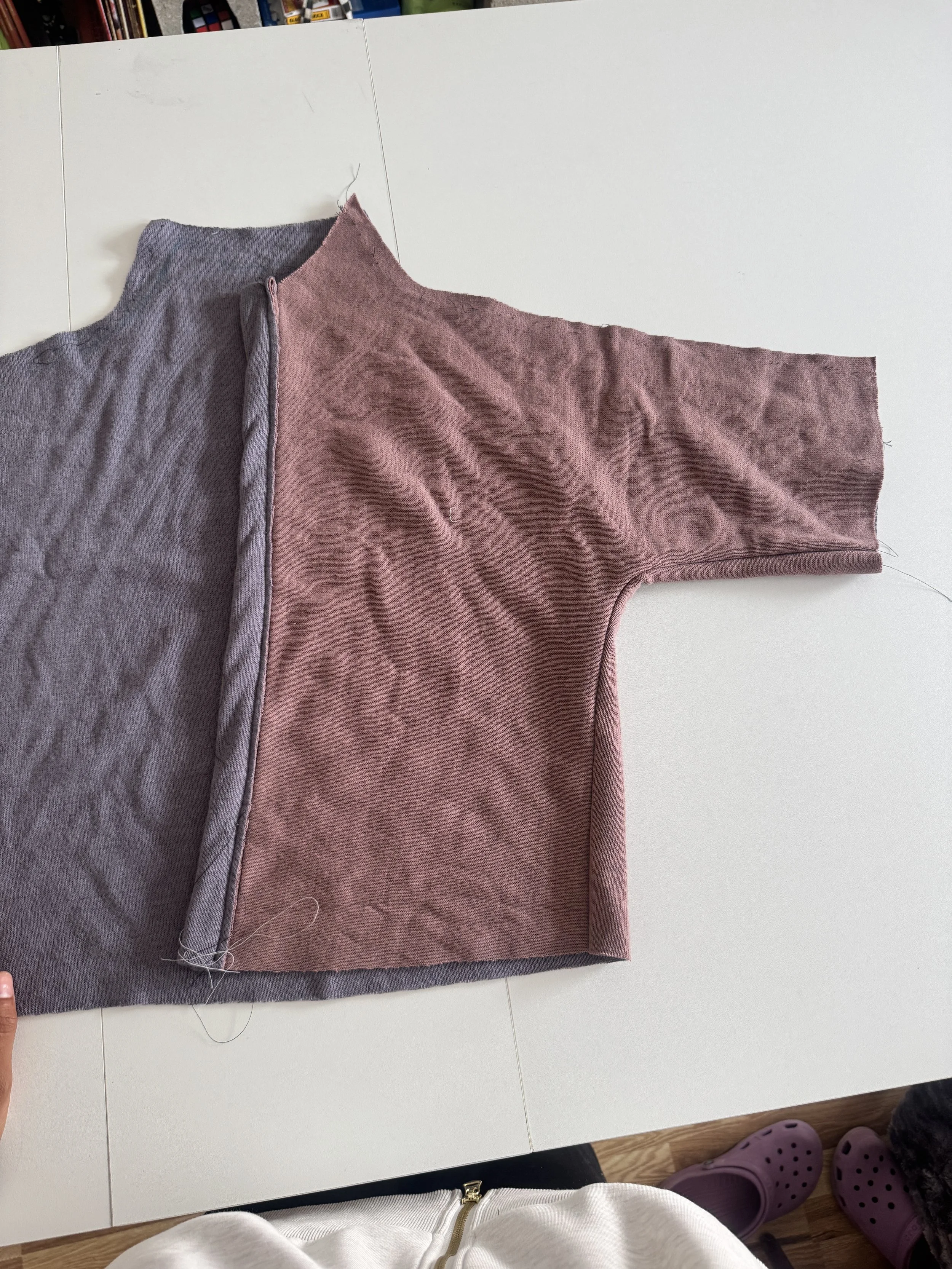
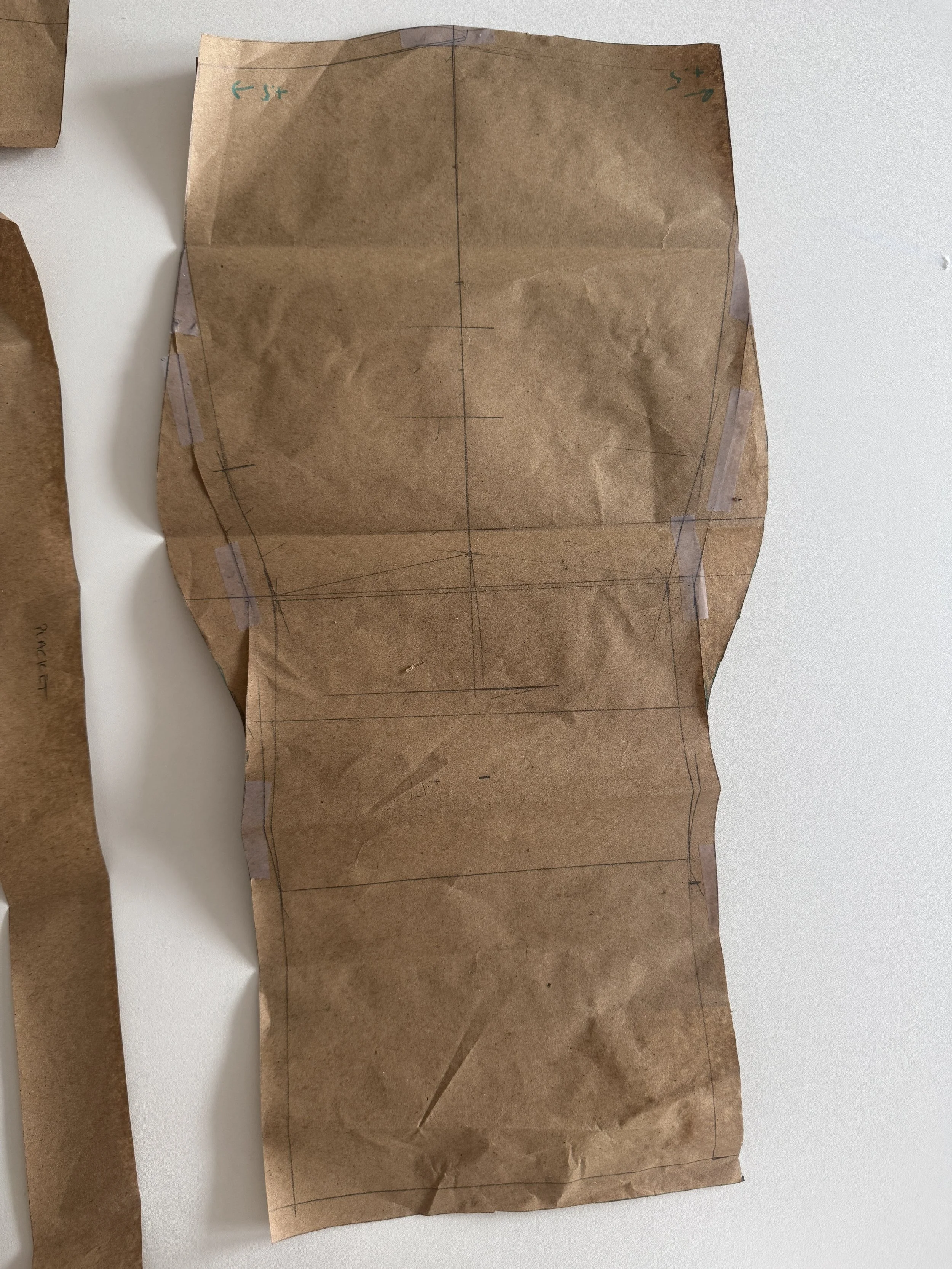
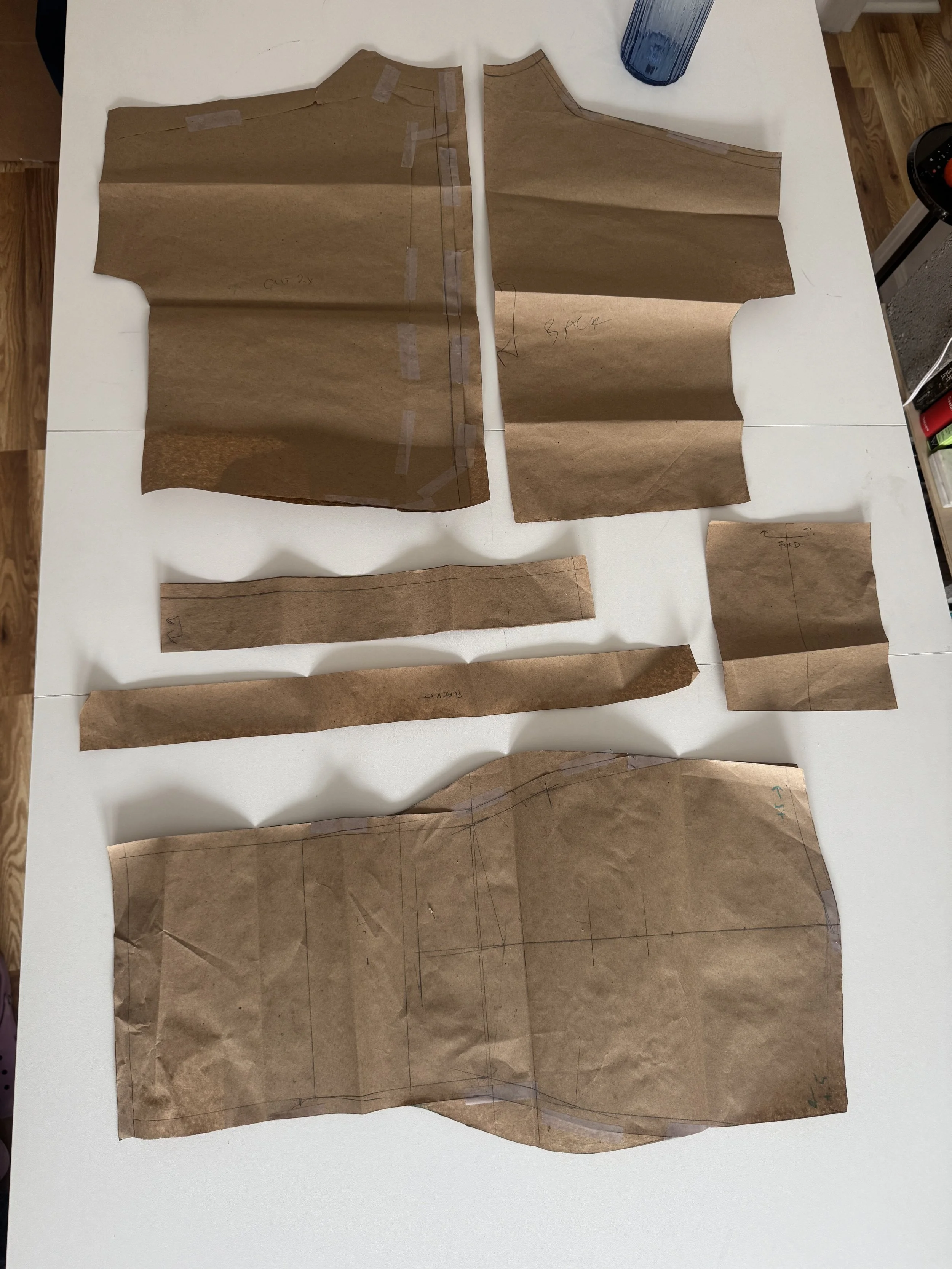
The first prototype was built without a sleeve to figure out the right direction. The short-to-long conversion came out of wanting the capsule to cover every sleeve length — since the sundress is sleeveless, the sweater needed to account for the remaining range of climates and preferences. Pattern adjustments were made: neckline markings in blue to refine the transition from front to back high neck, and taped adjustments to the sleeve to achieve the right flare before the band cinches it back in.
final prototype
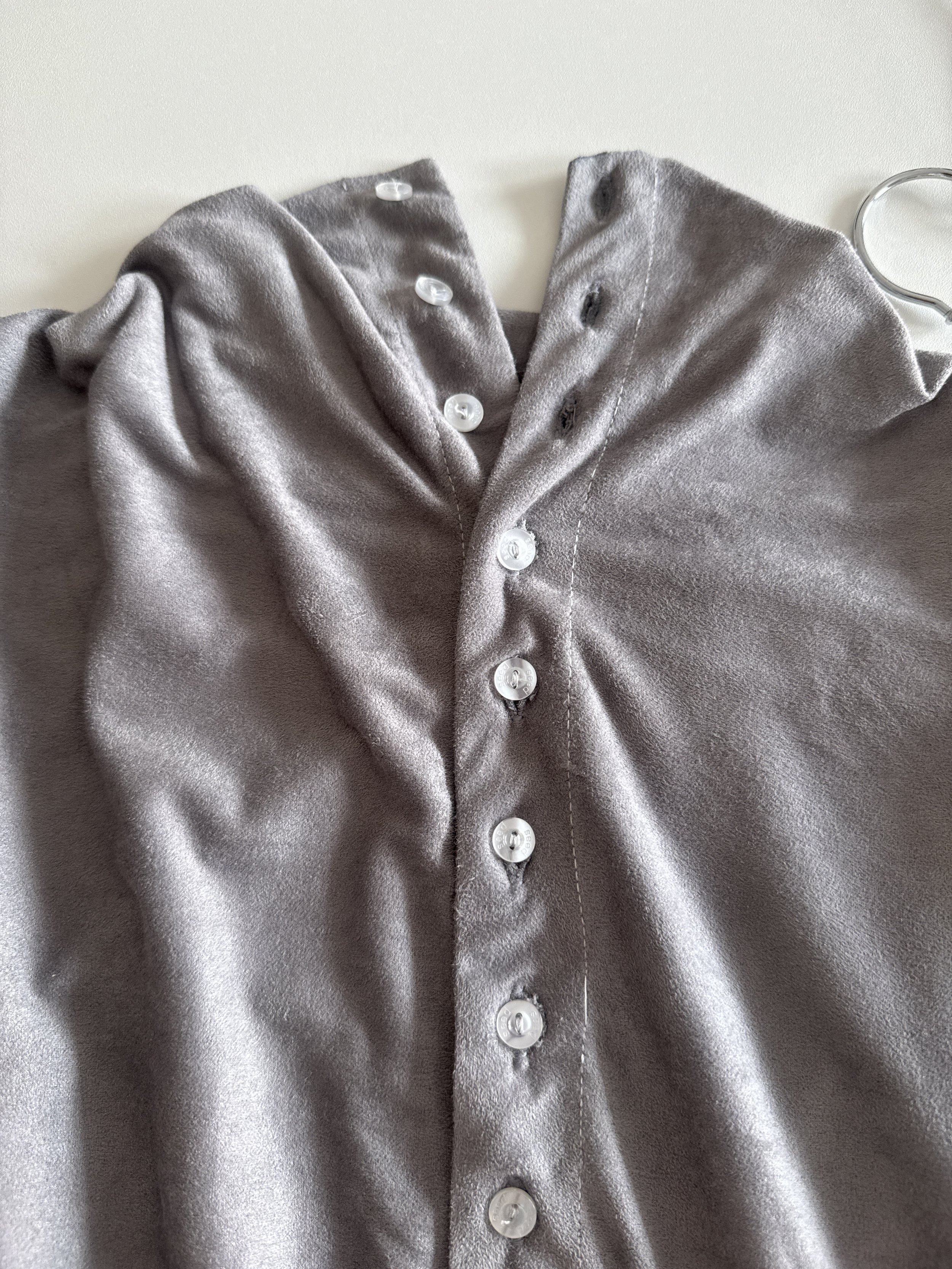
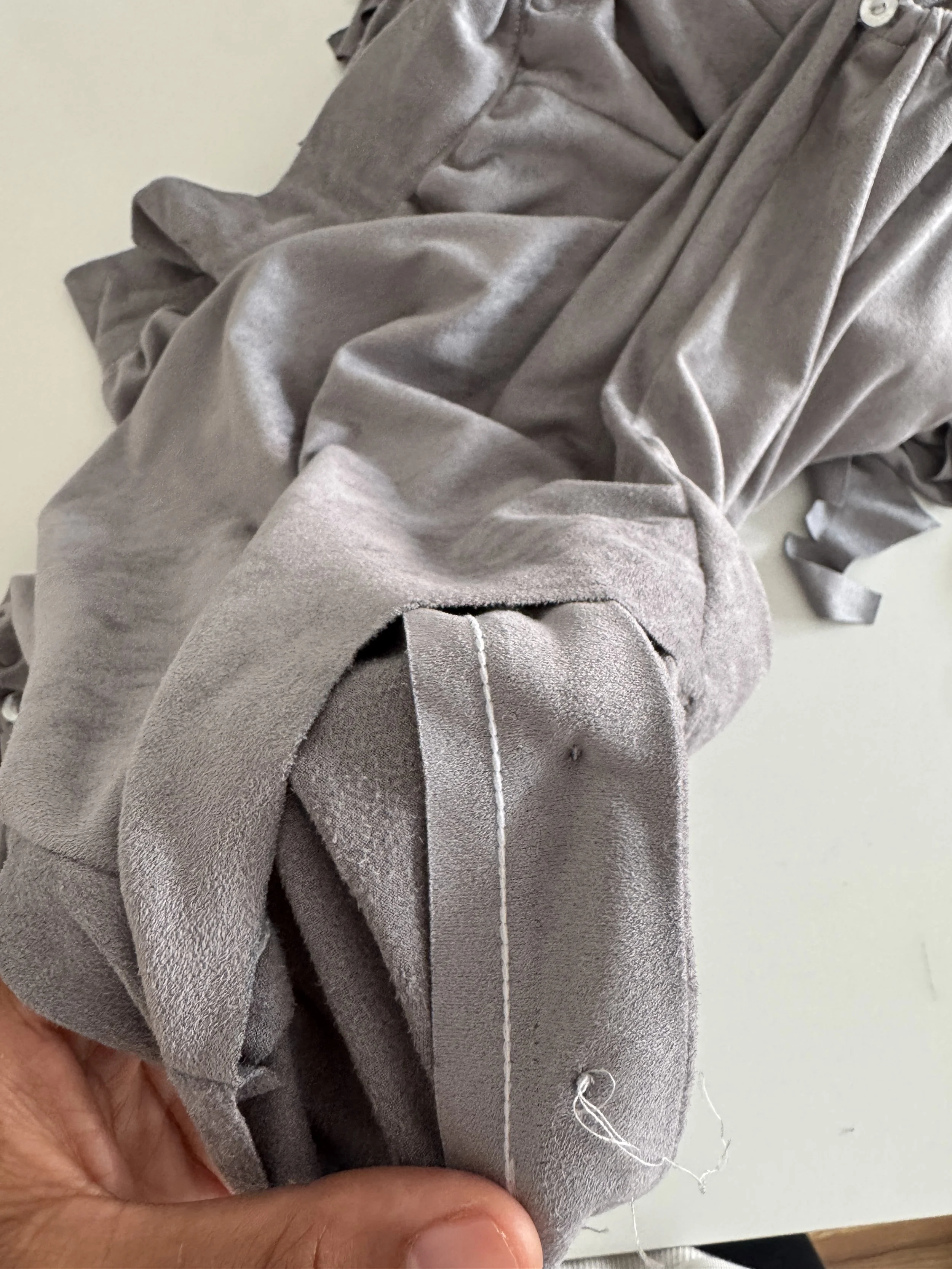
detail shots
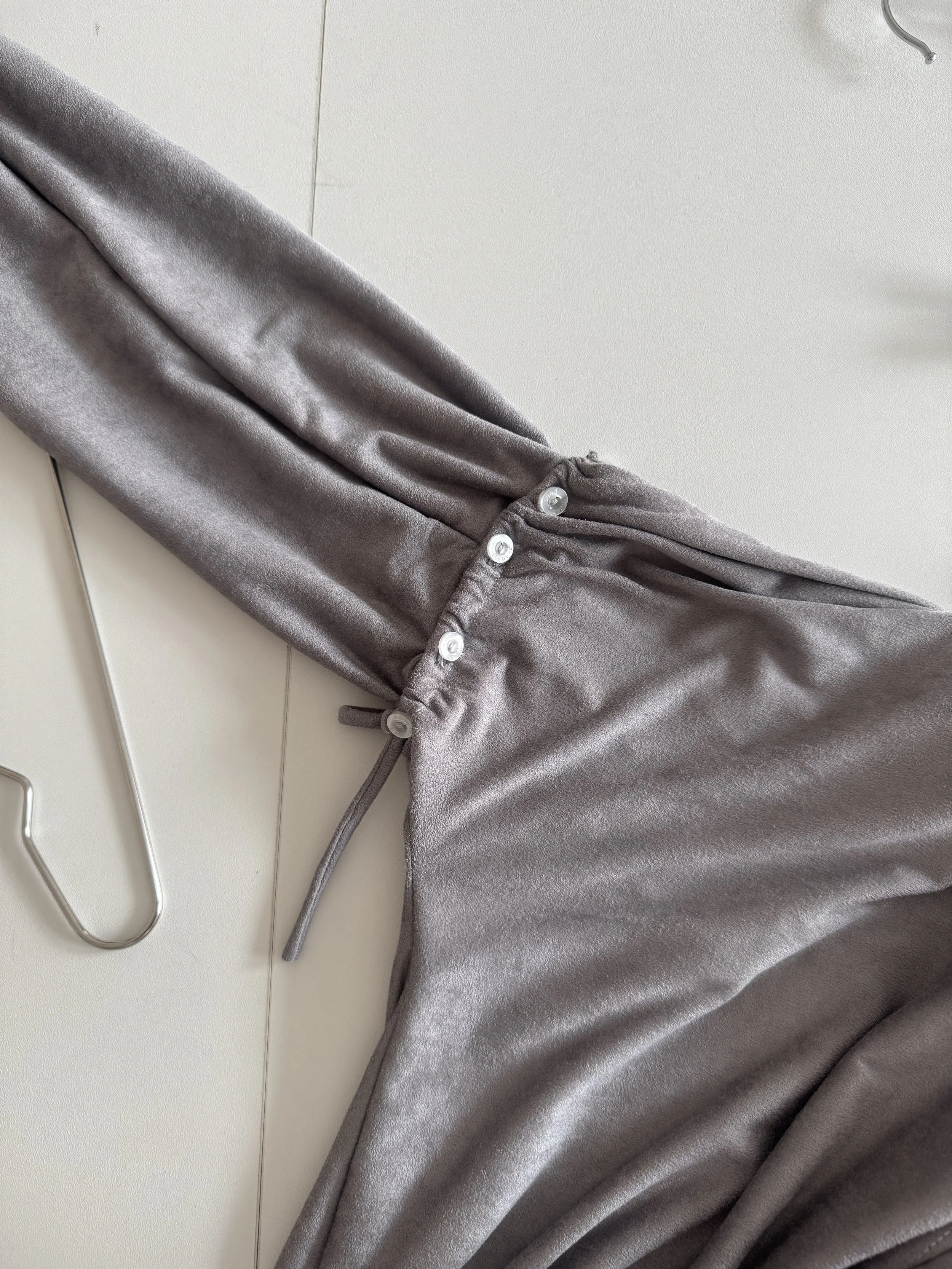
3) Lounge Pants
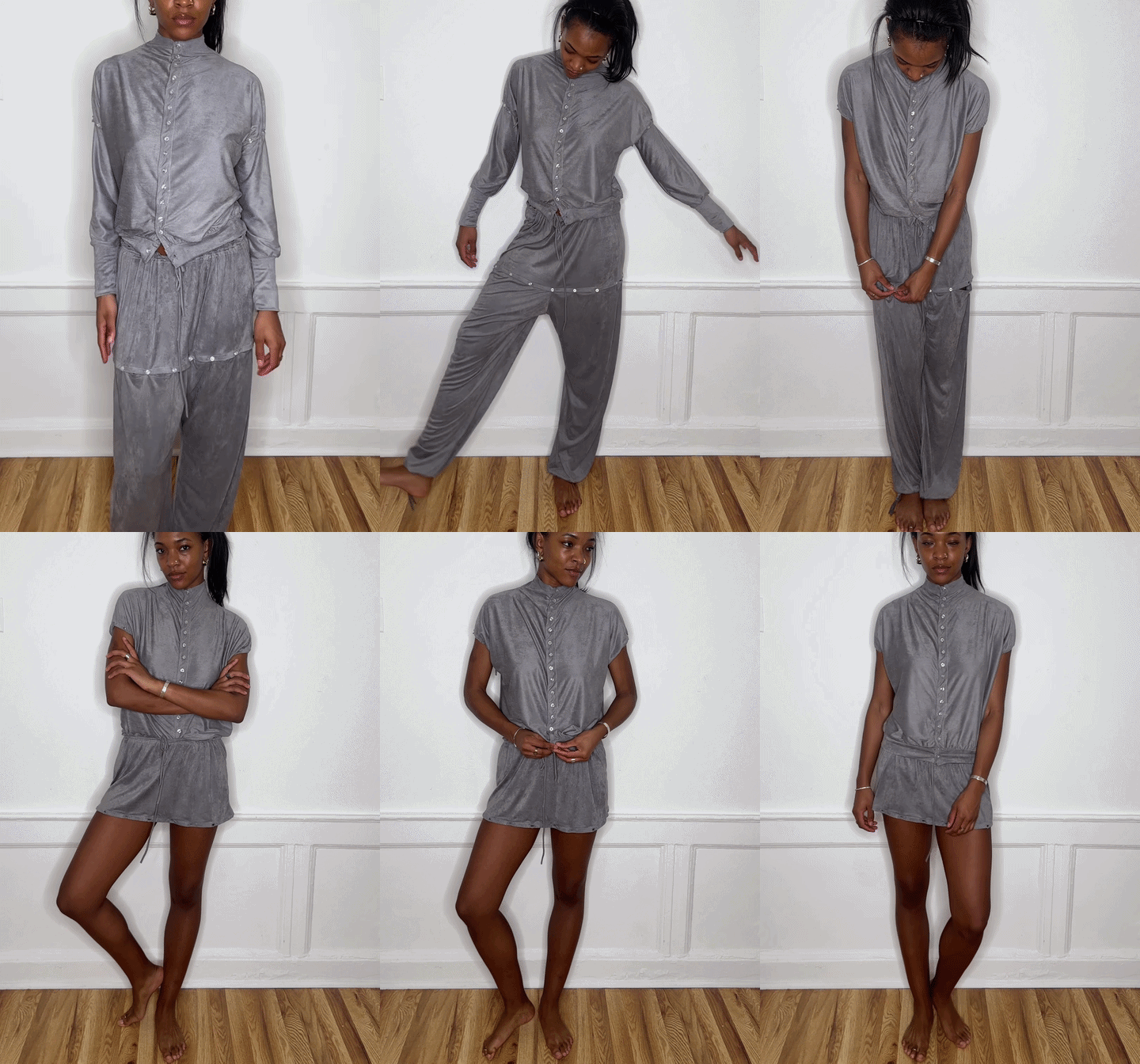
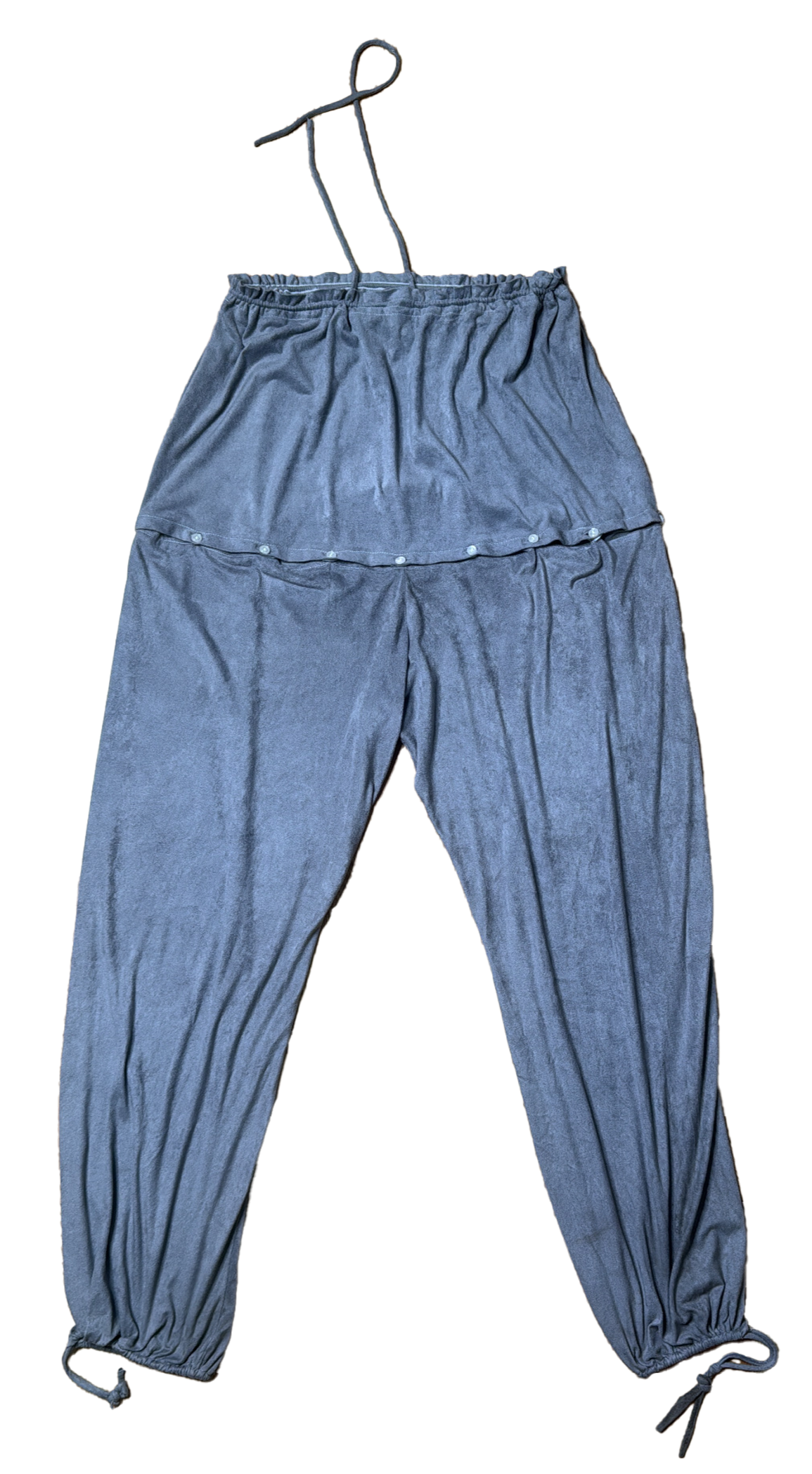
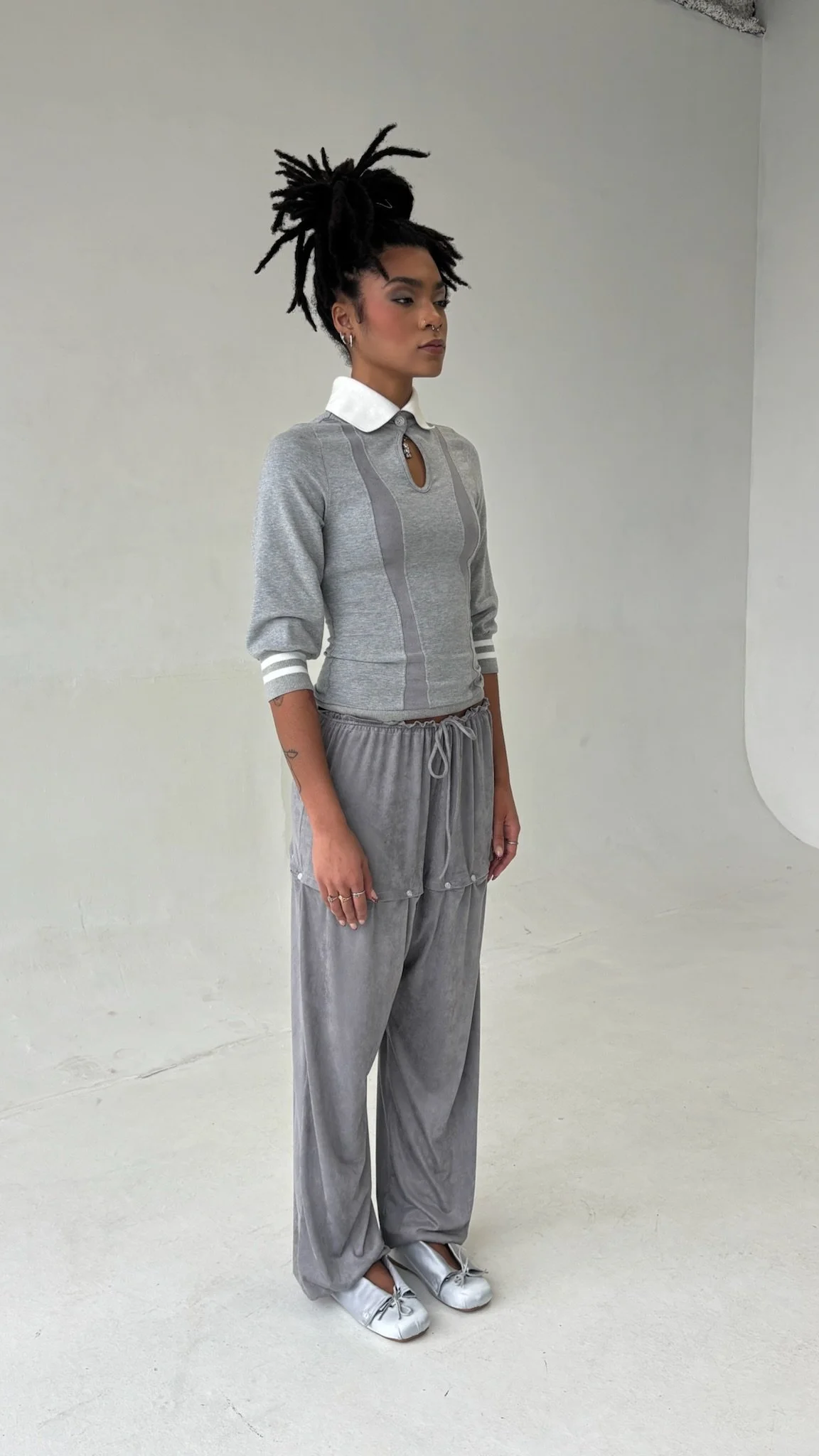
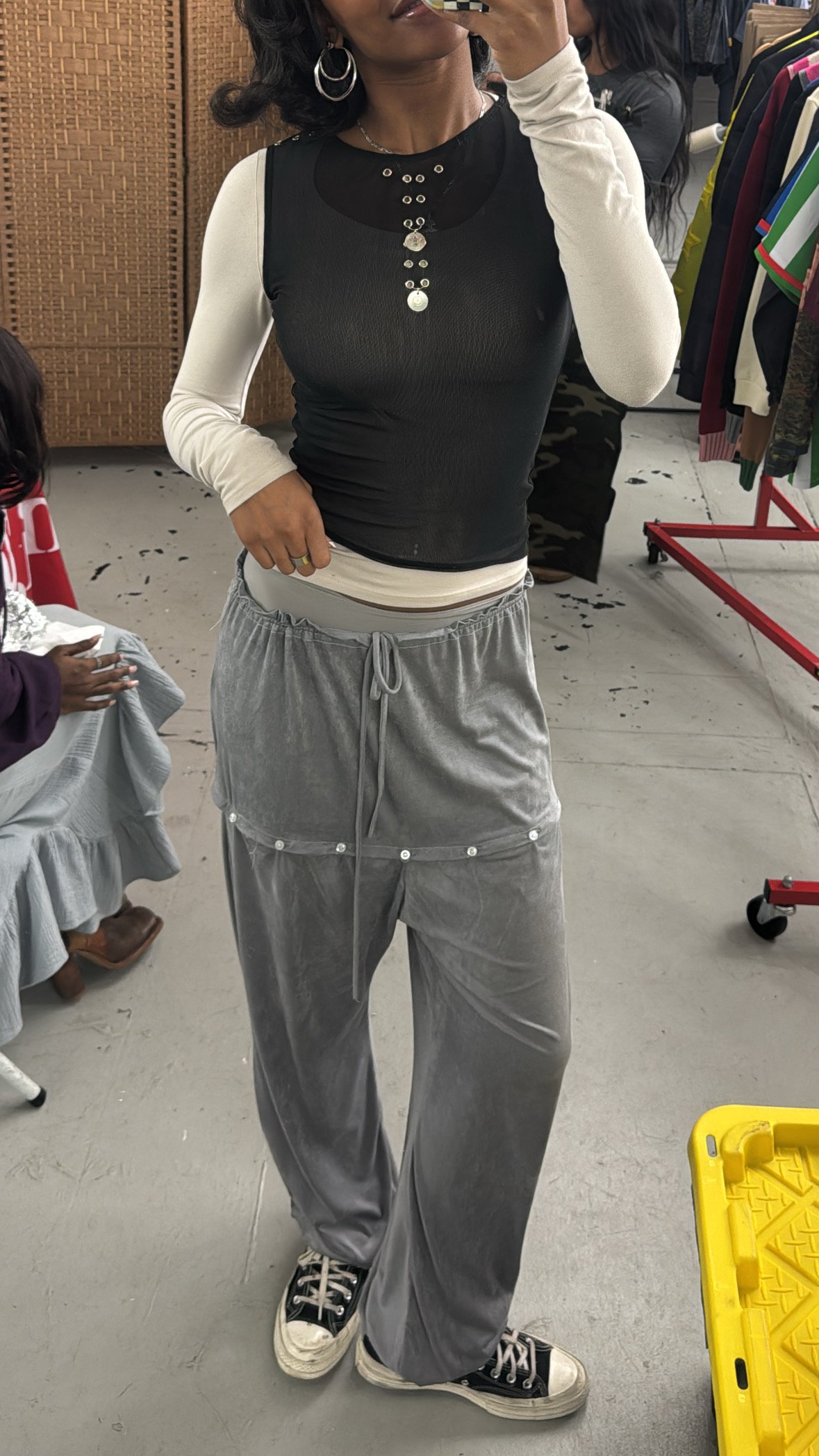
Made first, listed last — because these are where every motif in the capsule shows up together: drawstrings that adjust fit and create volume, extensions that button on and off, a silhouette that moves between cozy and dressed-up without any effort.
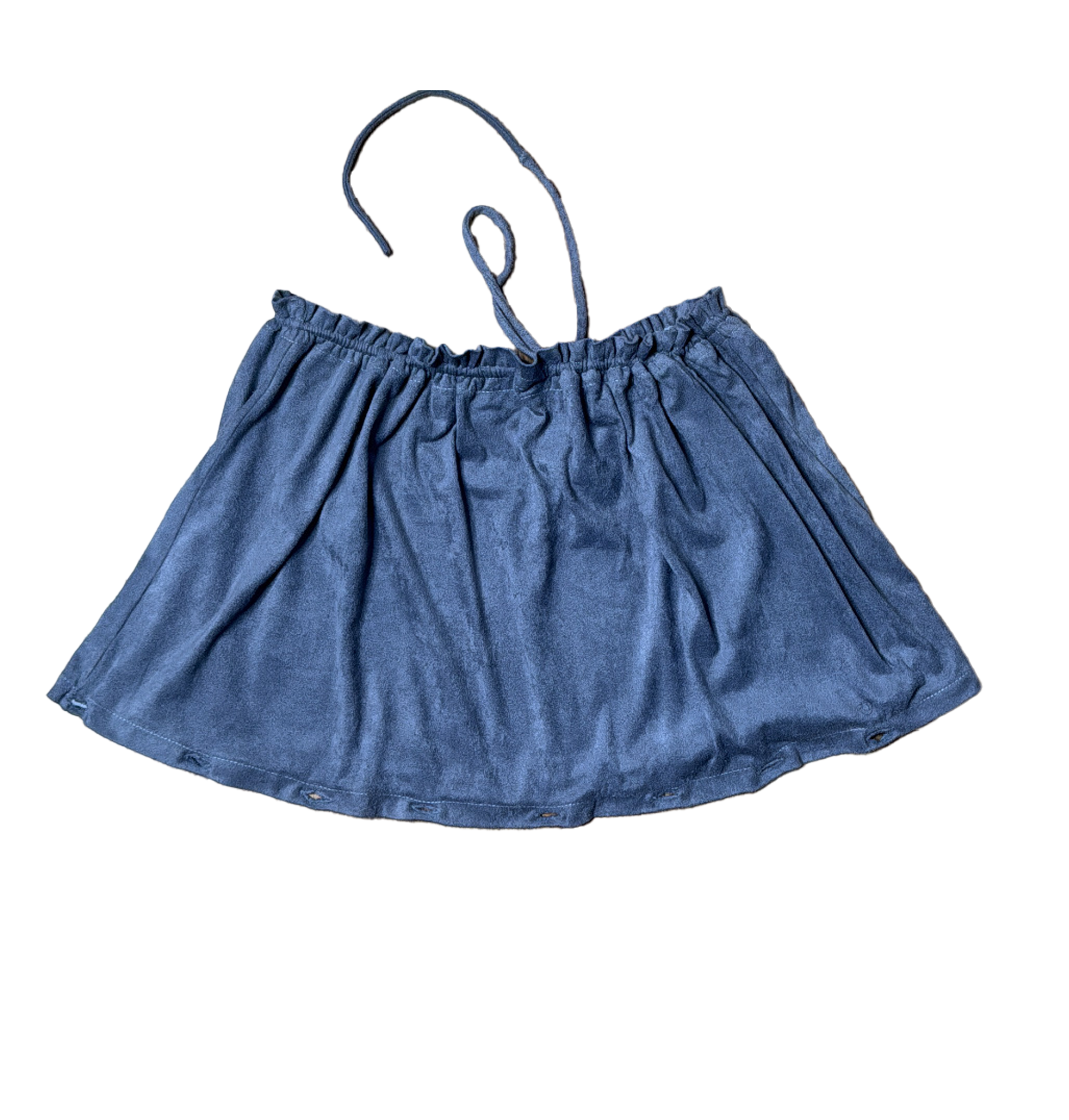
The pants drape the leg cleanly and layer with every other piece. Button off the skirt panel and they become a mini. Button it back on and they're full-length pants again.
process
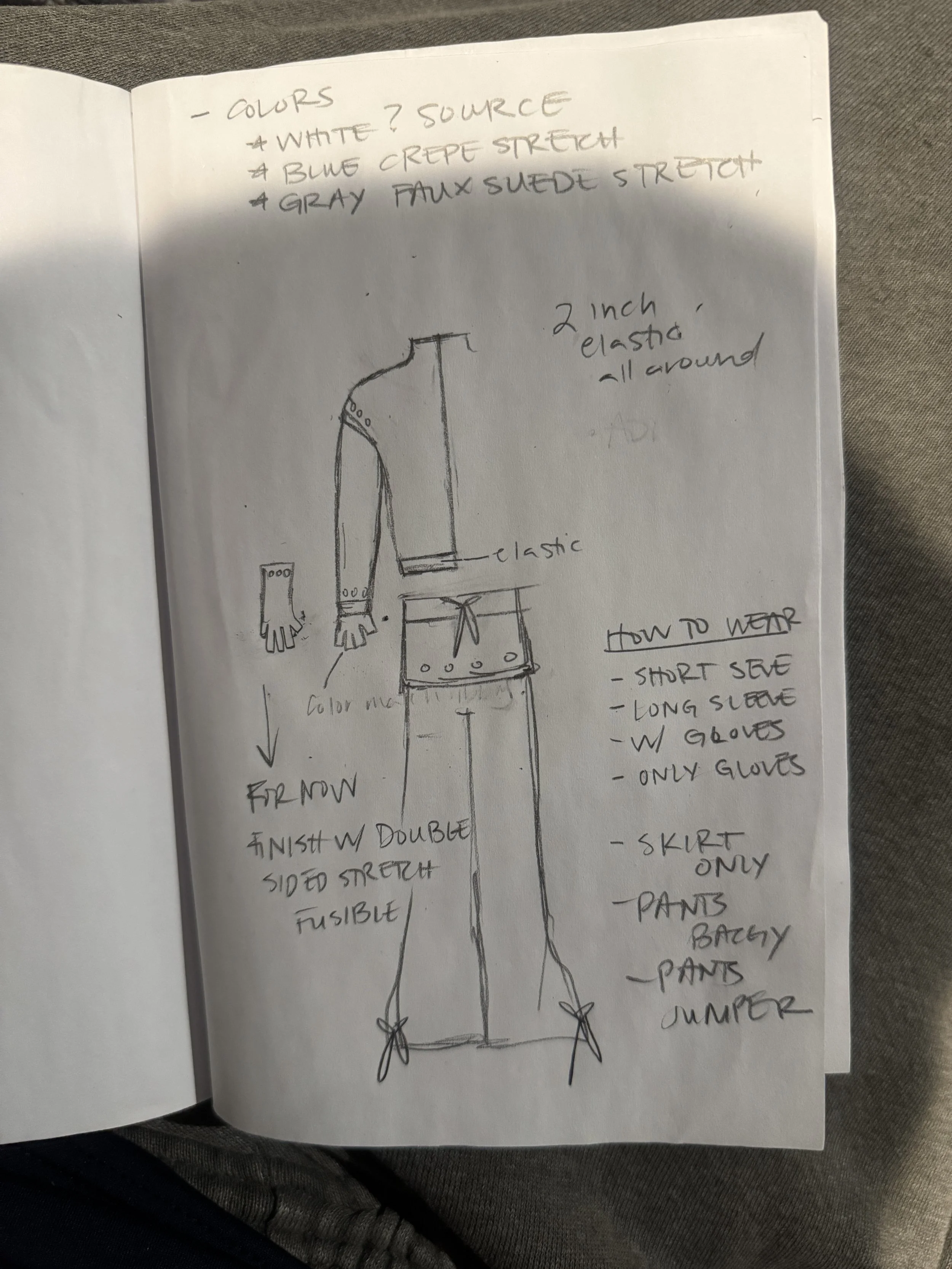
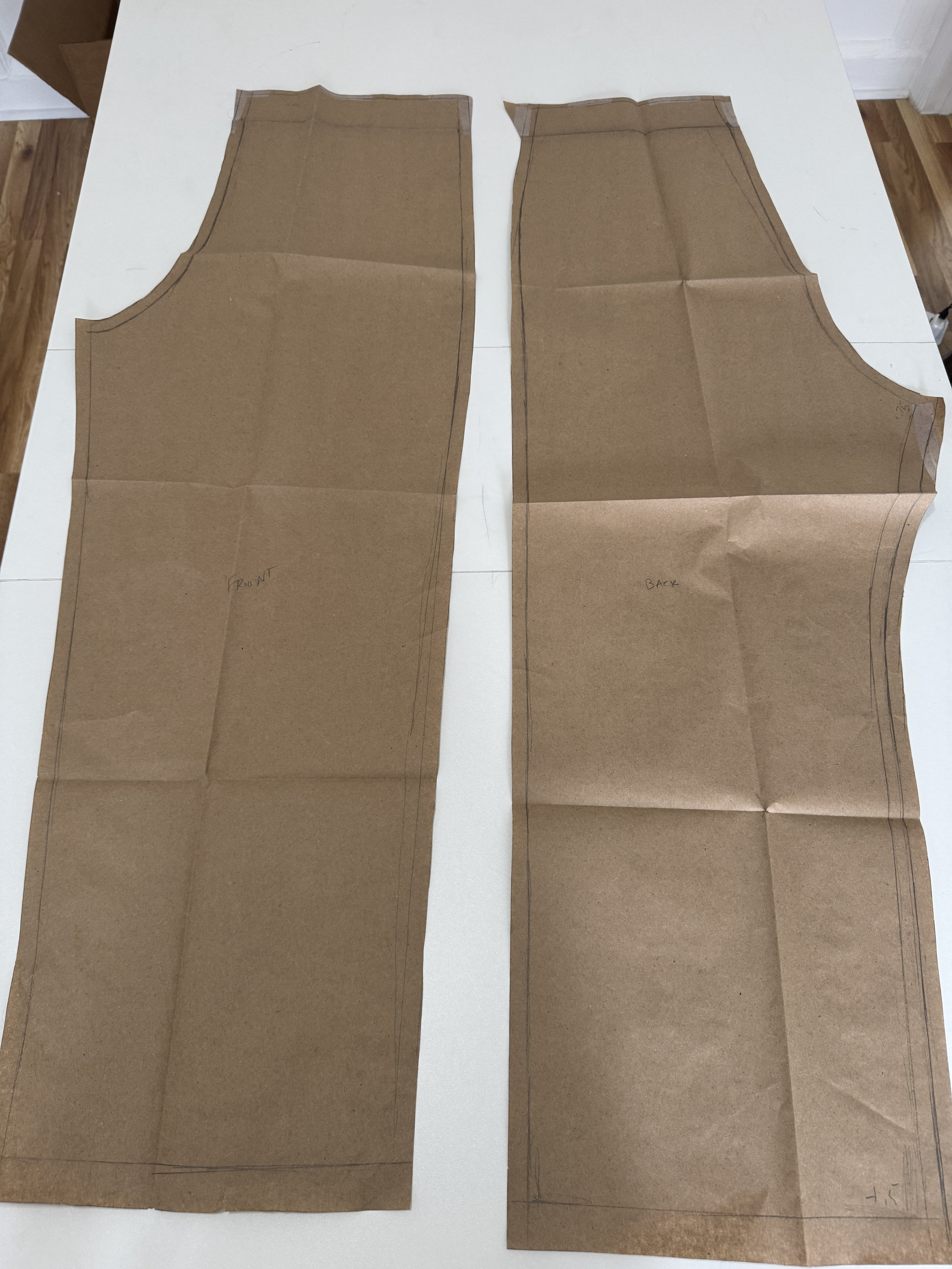
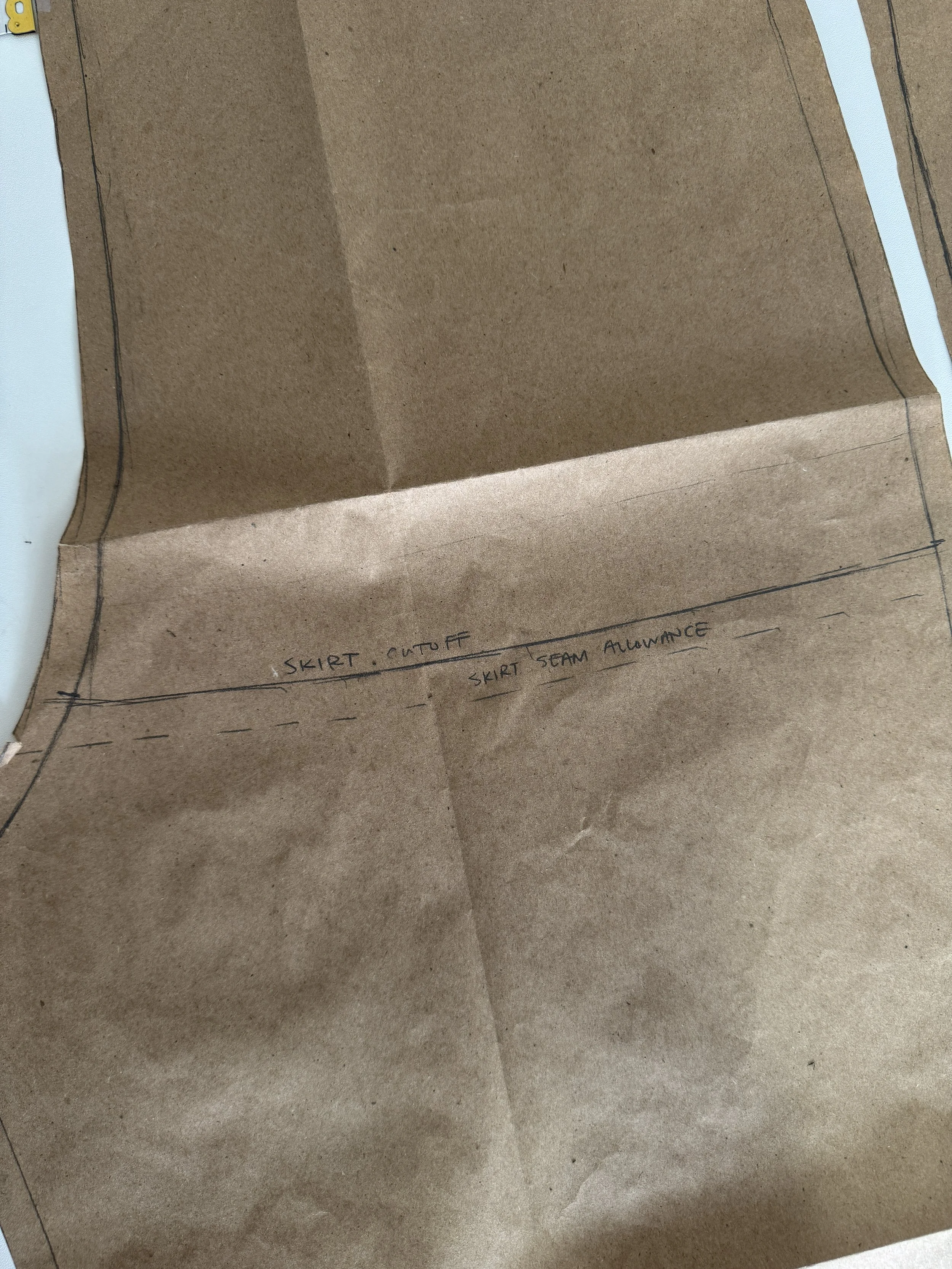
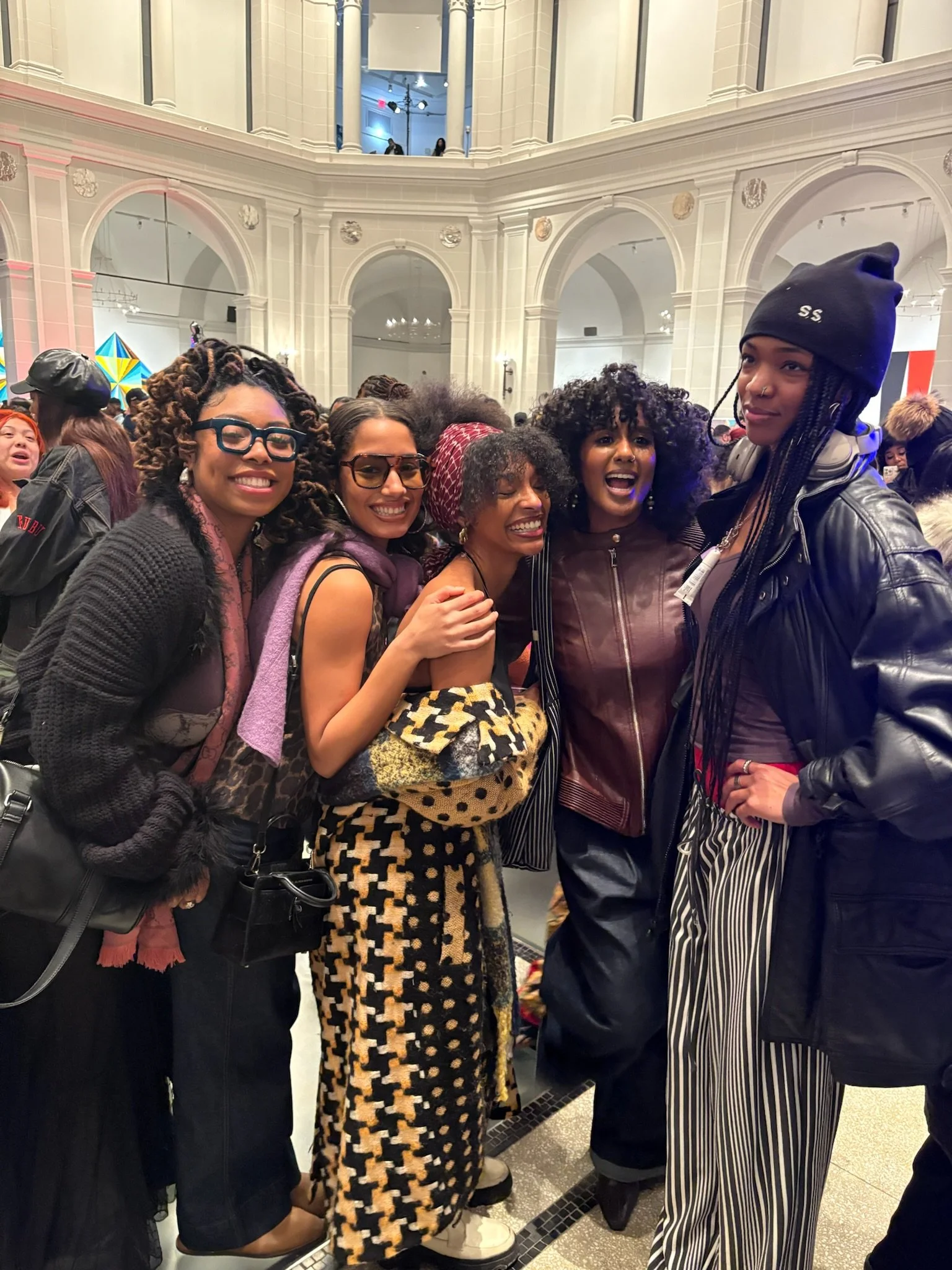
Patterned as a straight lounge pant first. Before anything else, I wore first muslin went out into the world — worn for a full night out with friends to confirm the drape and movement held up with real body motion, especially through the legs, which do more daily work than any other part. Once comfort was confirmed, the conversion point was mapped out with seam allowance accounted for, and the skirt panel was drafted from there.
final prototype
Thank you for your consideration.
Kylee Morgan
kyleeamorgan@gmail.com